Medals: campaigns, descriptions and eligibility
Details of the medals awarded to serving members of the armed forces, veterans and MOD employees; and who can receive them.
The Ministry of Defence Medal Office issues medals to currently serving members of the armed forces, veterans and MOD employees. If you are a member of other services, such as the fire, police or prison service, you should contact your organisation’s Human Resources department in the first instance.
You can apply for a medal if you meet the criteria.
Journalists who are not enquiring about medals should refer to the media enquiries guidance on Ministry of Defence
The information in this guide is intended to give a brief overview only.
Announcements
Current Medals
Following the accession of His Majesty King Charles III, from 1 October 2023 current medals now feature new effigies. The Medal Office will however continue to issue medals bearing the effigy of Her Majesty Queen Elizabeth II for those who qualified before the date. The images below may not reflect the medal that the recipient receives.
The Coronation Medal 2023 Enquiries
Details relating to the distribution process are in development and will be published as soon as available. Until that point, units and individuals are not to approach the MOD Medal Office or the MOD’s medal suppliers. Any enquiries or attempts to apply will not be acknowledged and will be deleted.
The Coronation Medal 2023
On 5 May 2023, the Culture Secretary announced the introduction of a Coronation Medal to recognise members of the Armed Forces, frontline emergency service workers and people actively contributing to the coronation of King Charles III and Queen Camilla, with an expected total of 400,000 recipients. In recognition of His Majesty The King’s role as Commander-in-Chief of the UK Armed Forces, members of the Defence community who meet any one of the following criteria will be awarded the Coronation Medal:
- Serving members of the Armed Forces who have completed five full calendar years of service and were in active service on 6 May 2023.
- Members of the Armed Forces who participate in Armed Forces Coronation events throughout the rest of 2023, such as official gun salutes, parades, or presentations of regimental colours.
- Civil Service and those from MOD-sponsored voluntary organisations who provide active contributory service to official constitutional Coronation events including events in the Devolved Administrations, Crown Dependencies and Overseas Territories. These include the Coronation Service on 6 May 2023 (Operation GOLDEN ORB), or the National Service of Thanksgiving and Dedication for Their Majesties on 5 July 2023 (Operation GOLDEN SCEPTRE).
The majority of eligible MOD personnel will automatically be identified and notified in due course. An application process will be announced for those who have left the Armed Forces since 6 May 2023. The medal will likely be distributed to eligible recipients from late Autumn 2023, as and when stock is available.
If you are employed or sponsored by another frontline emergency service that may be eligible for the Coronation Medal, please contact your respective Honours or HR departments for further information, as the MOD Medal Office only administers medals relating to the Armed Forces.
Delay to historic requests
As part of the Defence Records Management Project, archived service files up until 1 January 1963 are being transferred to the National Archives.
This is significantly impacting assessment beyond our four-month response time for WW2 medal applications.
We are working with the National Archives to speed up this process Regrettably, some applicants have suffered long delays. This is outside of our expected service standards, for which we apologise, and are grateful for your continued patience whilst this matter is resolved.
Queen’s Platinum Jubilee Medal – Reserve Forces Criteria Review (Jul 23)
Following multiple appeals and the outcome of a Service Complaint upheld by the Defence Council, the eligibility criteria for the Queen’s Platinum Jubilee Medal (QPJM) in respect of Reserve Forces personnel are under review by the appropriate Reserve Forces and Defence Services Secretary’s policy staff, and single Service authorities.
As a result, QPJM applications and appeals relating to Reserve Forces personnel are currently being frozen to avoid unnecessary work and will be reassessed against the revised criteria as soon as these are finalised. This work is likely to take a several months to complete and the outcome will be published via a DIN as soon as possible. It must be stressed that this review will not change the underlying requirement for five years (1826 days) qualifying service as at 6 Feb 2022, as this is a Pan-Government requirement.
Coronation Medal 1953
The MOD Medal Office is unable to accept and assess applications for Her Majesty The Queen’s Coronation Medal 1953. (Dec 2018)
Clarification of the qualification criteria for the Accumulated Campaign Service Medal (ACSM) 1994 and 2011
A formal review of the Accumulated Campaign Service Medal policy and qualification criteria has been conducted to resolve ambiguity over how time on operations is counted towards the ACSM. More detailed information about the review, guidance on eligibility and how to apply can be found on The Accumulated Campaign Service Medal (ACSM) 1994 and 2011 Policy Review 2020.
Decorations, Gallantry and Distinguished Conduct medals
You can’t apply for these awards. You must be recommended to qualify.
You can read recommendations for honours and awards at The National Archives.
The awards below are listed in the official ‘order of precedence’, The letters in brackets are put after a person’s surname to show their award.
Victoria Cross (VC)
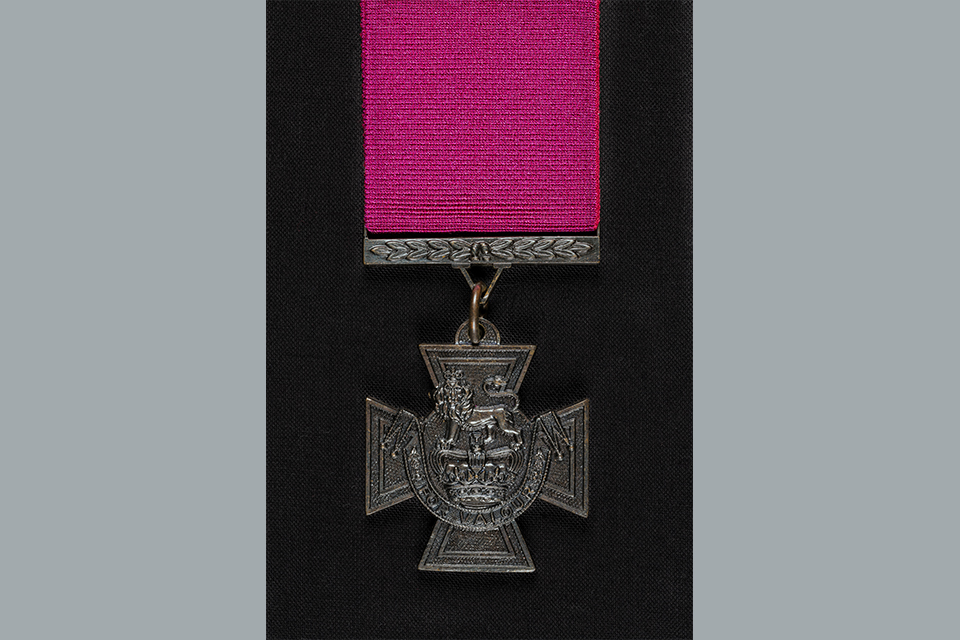
The Victoria Cross
The Victoria Cross is the premier Operational Gallantry award given for ‘most conspicuous bravery, or some daring or pre-eminent act of valour or self sacrifice, or extreme devotion to duty in the presence of the enemy’.
It may be awarded to all ranks of the services and civilians and can be awarded posthumously. Individuals who perform a further act of such gallantry which would have merited a second award of the VC would be issued with a bar.
The MOD Medal Office does not issue this award.
George Cross (GC)
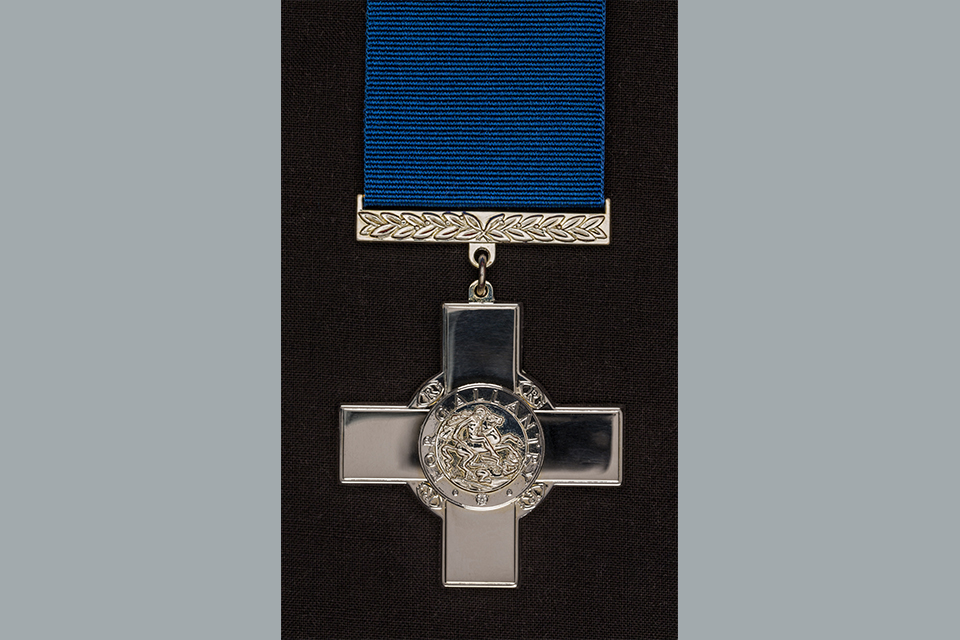
The George Cross
The George Cross is the premier award given for non-operational gallantry or gallantry not in the presence of an enemy. This is awarded for acts of the greatest heroism or of the most conspicuous courage in circumstances of extreme danger.
The George Cross is equal in stature in the UK honours system to the Victoria Cross, the highest military gallantry award. This has always been the case since the introduction of the award in 1940.
It may be awarded to all ranks of the services and civilians and can be awarded posthumously.
The MOD Medal Office does not issue this award. Replacement awards are available from the Central Chancery of the Orders of Knighthood.
Orders of the Bath and the British Empire
Read information about the Order of the Bath and the Order of the British Empire.
Distinguished Service Order (DSO)
The Distinguished Service Order is an operational gallantry award given for highly successful command and leadership during active operations. Personnel who perform a further act of such leadership which would have merited a second award of the DSO would be issued with a gold bar.
It may be awarded to all ranks of the services. This award is not available posthumously.
The MOD Medal Office does not issue this award. Replacement awards are available from the Central Chancery of the Orders of Knighthood.
Conspicuous Gallantry Cross (CGC)
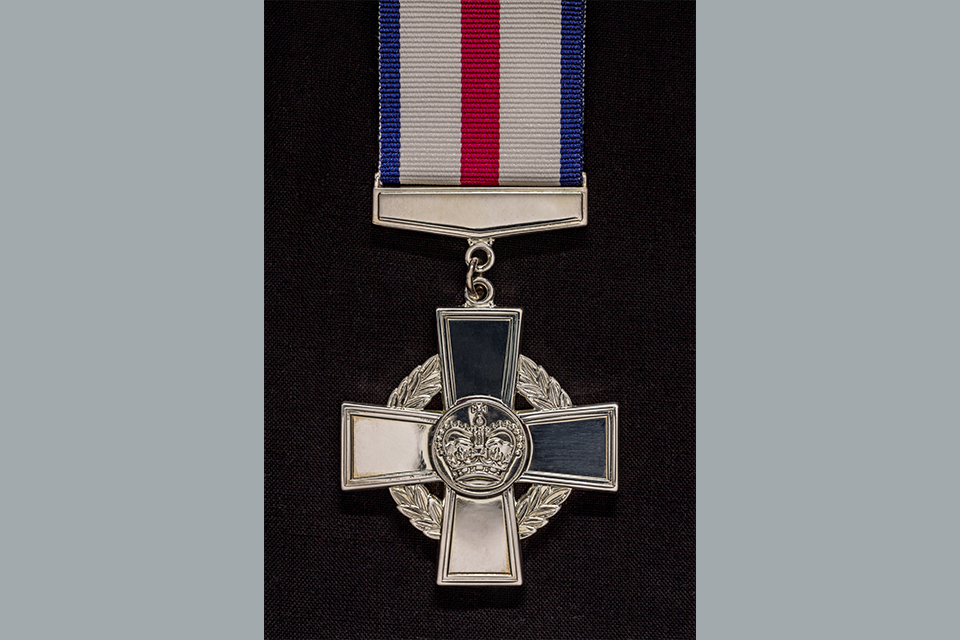
The Conspicuous Gallantry Cross
The Conspicuous Gallantry Cross is an operational gallantry award given to all ranks of the services in recognition of an act (or acts) of conspicuous gallantry during active operations against the enemy. Personnel who perform a further act of such gallantry which would have merited a second award of the CGC would be issued with a silver bar.
This award is available posthumously.
You can replace a Conspicuous Gallantry Cross if you meet the criteria.
Royal Red Cross (Class I) (RRC)
The Royal Red Cross is a Meritorious award given ‘for exceptional devotion and competency in the performance of actual nursing duties…. over a continuous and long period’. Holders of the first class decoration are known as Members (RRC).
These awards are only available to the nursing services and are not available posthumously.
You can replace a Royal Red Cross (Class I) if you meet the criteria.
Distinguished Service Cross (DSC)
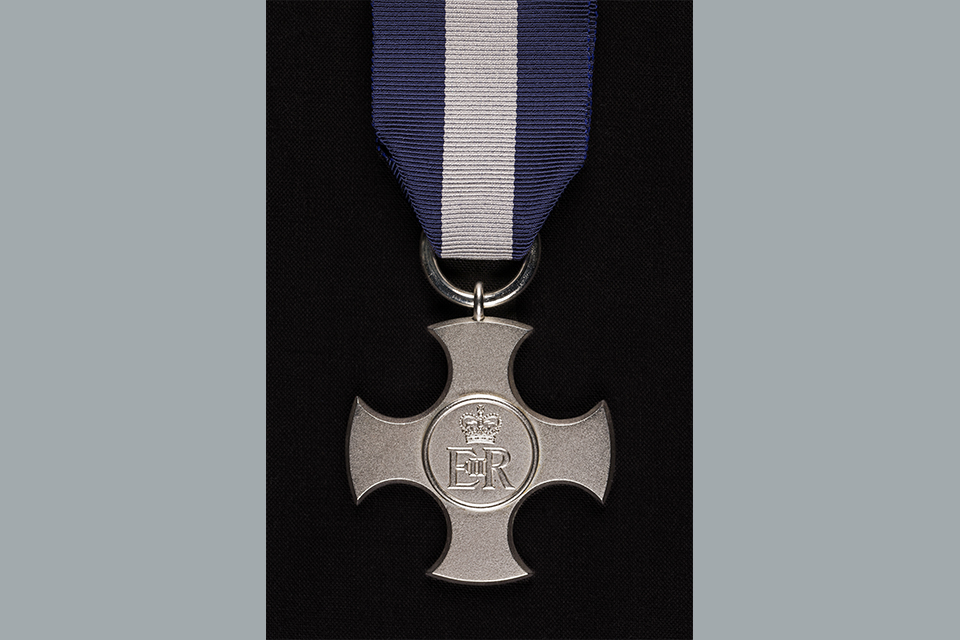
The Distinguished Service Cross
The Distinguished Service Cross is an operational gallantry award given to all ranks of the services in recognition of exemplary gallantry during active operations against the enemy at sea. Personnel who perform a further act of such gallantry which would have merited a second award of the DSC are issued with a silver bar, with rounded ends, ornamented by a crown.
This award is available posthumously.
You can replace a Distinguished Service Cross if you meet the criteria.
Military Cross (MC)
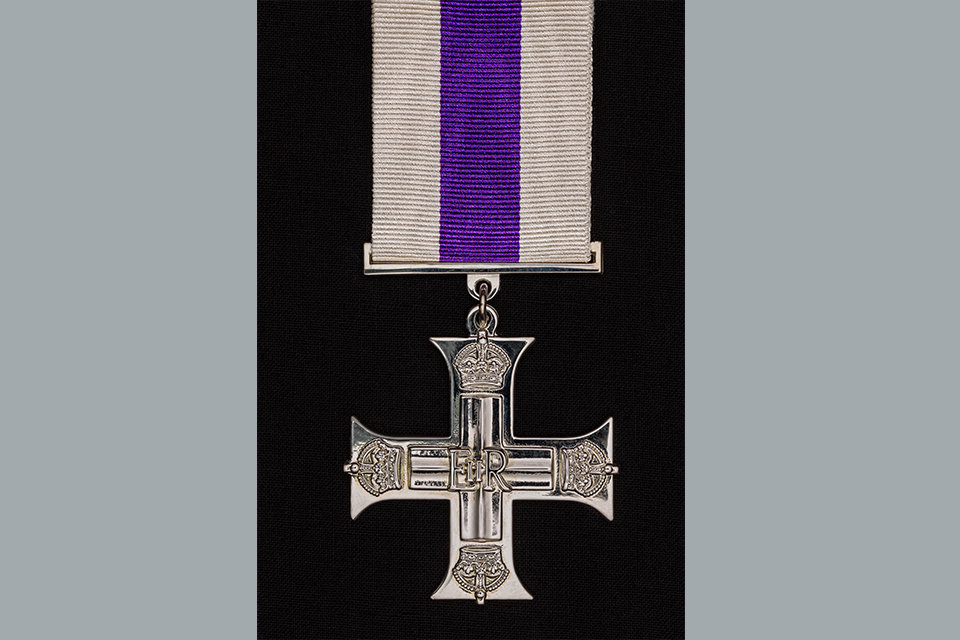
The Military Cross
The Military Cross is an operational gallantry award given to all ranks of the services in recognition of exemplary gallantry during active operations against the enemy on land. Personnel who perform a further act of such gallantry which would have merited a second MC will be issued with a silver bar ornamented by the crown.
This award is available posthumously.
You can replace a Military Cross if you meet the criteria.
Distinguished Flying Cross (DFC)
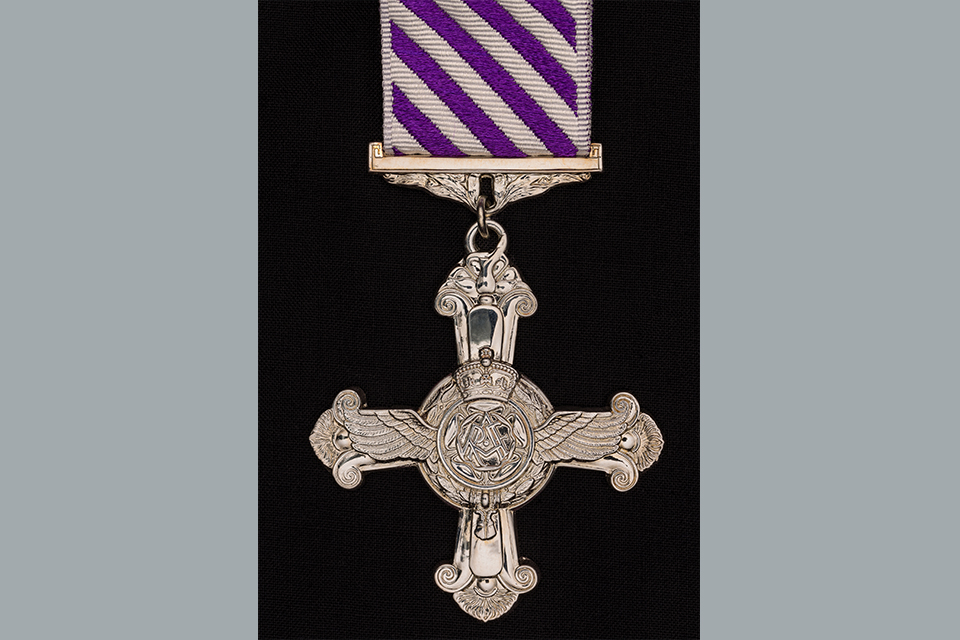
The Distinguished Flying Cross
The Distinguished Flying Cross is an operational gallantry award given to all ranks of the services in recognition of exemplary gallantry during active operations against the enemy in the air. Personnel who perform a further act of such gallantry which would have merited a second award of the DFC would be issued with a silver bar ornamented by an eagle.
This award is available posthumously.
You can replace a Distinguished Flying Cross if you meet the criteria.
Air Force Cross (AFC)
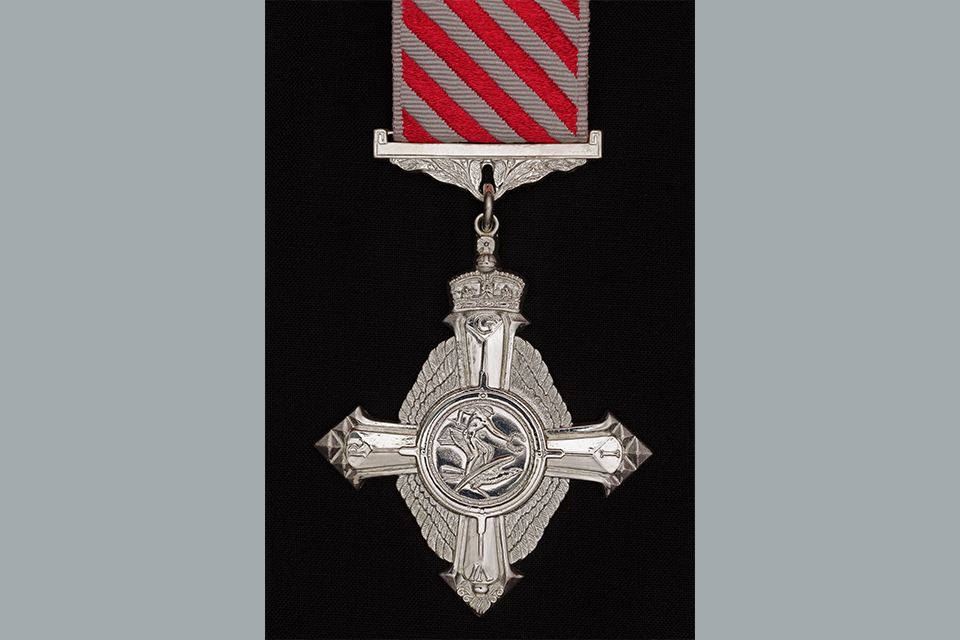
The Air Force Cross
The Air Force Cross is a non-operational award given to all ranks of the services in recognition of exemplary gallantry while flying not in the presence of the enemy. Personnel who perform a further act of such gallantry which would have merited the award of a second AFC are issued with a silver bar.
This award is available posthumously.
You can replace an Air Force Cross if you meet the criteria.
Royal Red Cross (Class II) (ARRC)
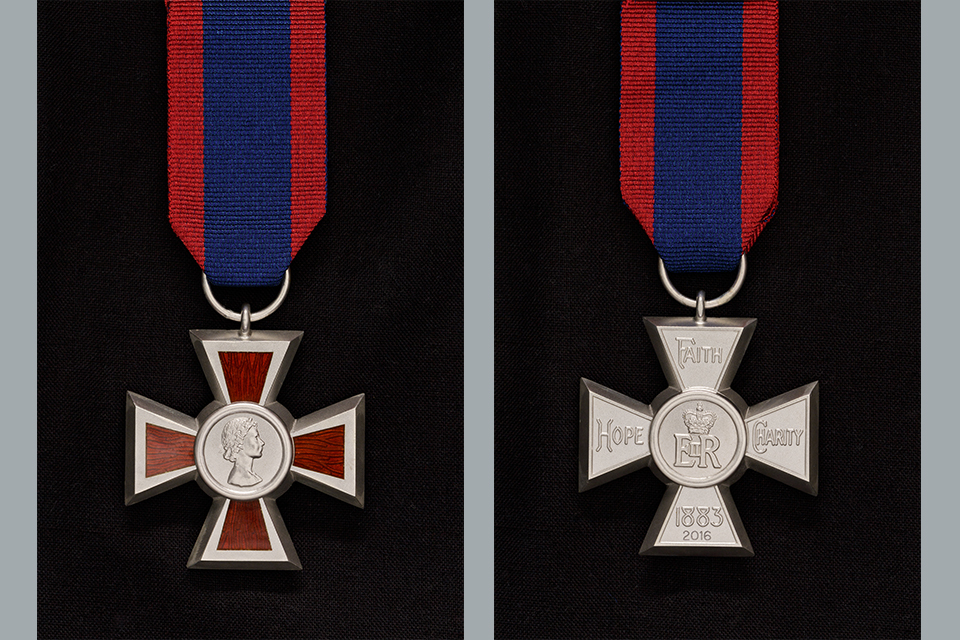
The Royal Red Cross (Class 2) front and back
The Royal Red Cross (Class II) is a Meritorious award given for special devotion and competency in the performance of actual nursing duties…. over a continuous and long period’. Holders of the second class decoration are known as Associates (ARRC). Holders of a Royal Red Cross (Class II) (ARRC) who merit a second award are promoted to a Royal Red Cross (Class I) (RRC).
These awards are only available to the nursing services and are not available posthumously.
You can replace a Royal Red Cross (Class II) if you meet the criteria.
George Medal (GM)
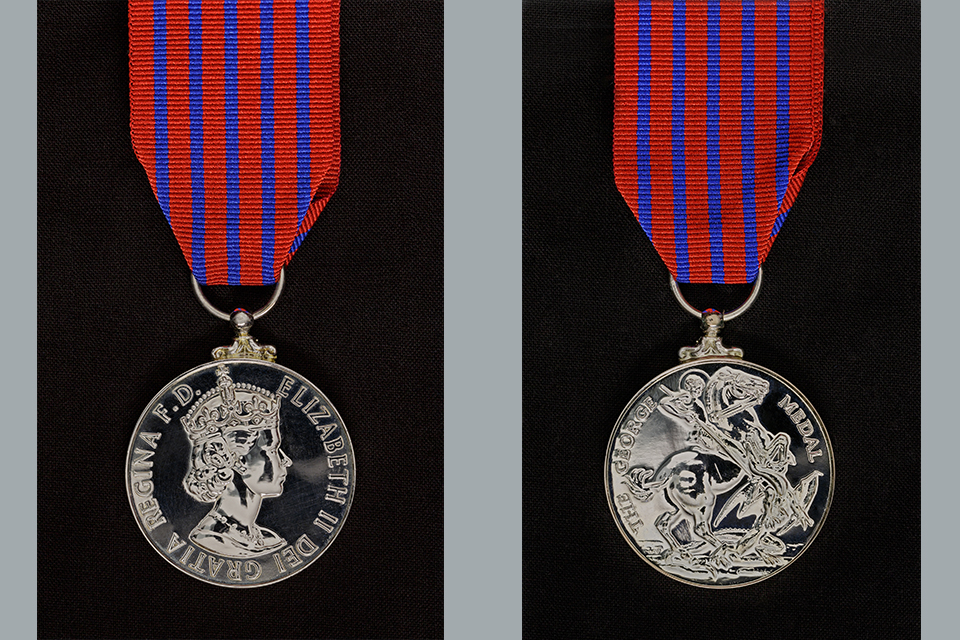
The George Medal front and back
The George Medal is awarded for conspicuous gallantry not in the presence of the enemy. A silver bar may be issued to George Medal holders who perform a further act of such bravery which would have merited award of a second GM.
This award is available posthumously.
The MOD Medal Office does not issue this award. Replacement awards are available from the Central Chancery of the Orders of Knighthood.
King’s Gallantry Medal (KGM)
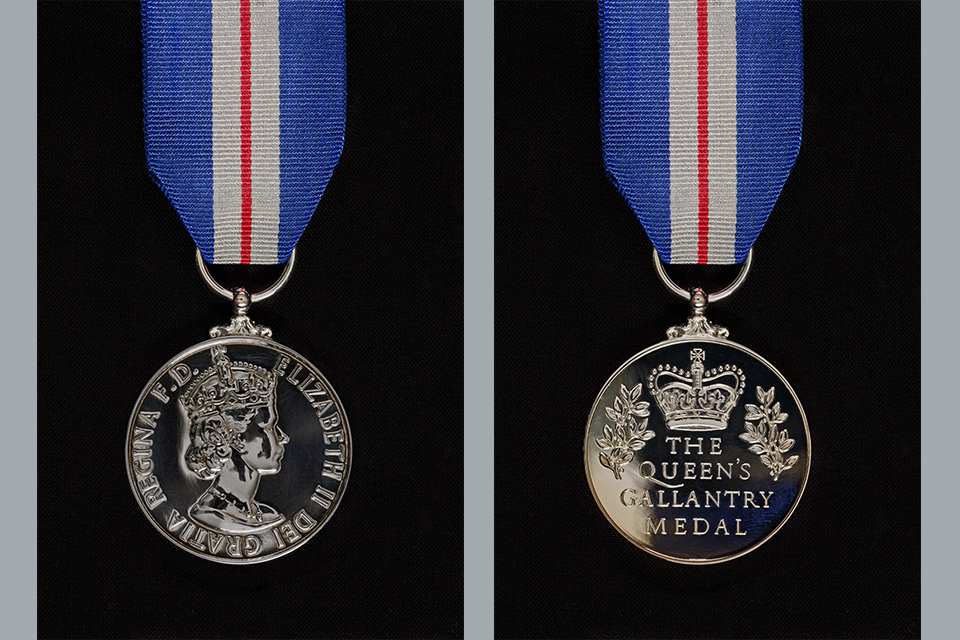
The Queen's Gallantry Medal front and back
The King’s Gallantry Medal is awarded to civilians for acts of exemplary bravery at a level below that of the George Medal. The KGM is also awarded to military personnel for acts which military honours would not normally be granted such as acts of exemplary bravery not in the presence of the enemy.
A silver bar may be issued to KGM holders who perform a further act of such bravery which would have merited award of the KGM.
This award is available posthumously.
The MOD Medal Office does not issue this award. Replacement awards are available from the Central Chancery of the Orders of Knighthood.
King’s Volunteer Reserves Medal (KVRM)
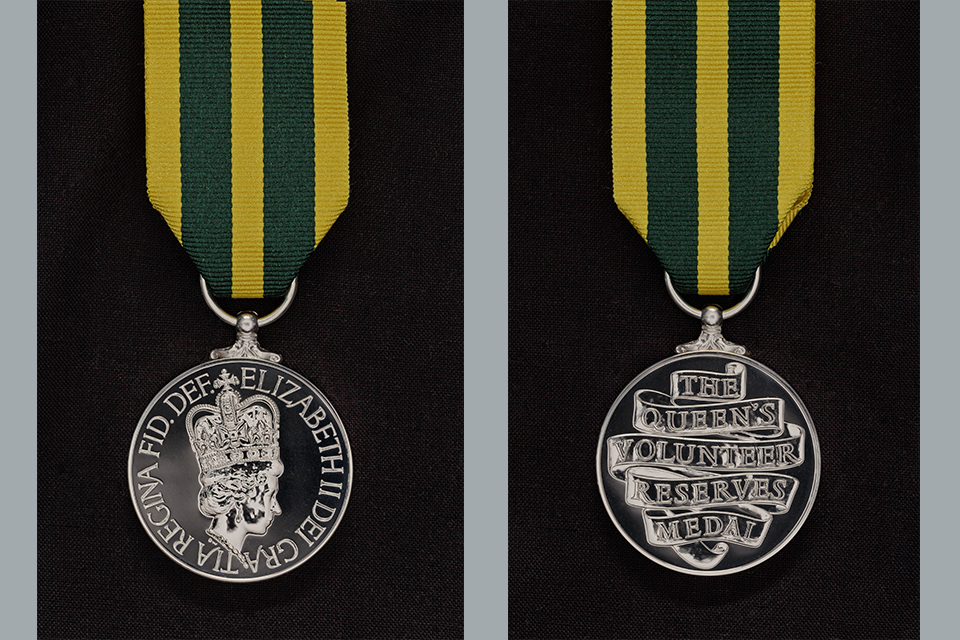
The Queen's Volunteer Reserves Medal front and back
The King’s Volunteer Reserves Medal is a meritorious award given for members of any rank of the Volunteer Reserve Forces, for devotion to duty and exemplary service over a period usually of at least 10 years that has been of particular value and an outstanding example to others.
This award is not available posthumously.
You can replace a King’s Volunteer Reserves Medal if you meet the criteria.
Mention in Despatches
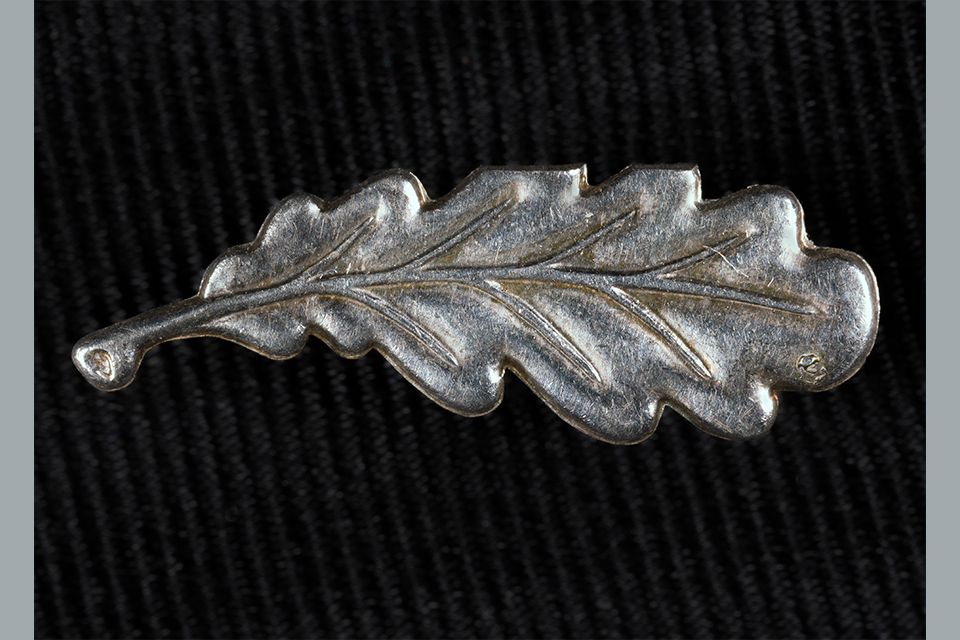
The Mentioned in Dispatches award
A Mention in Despatches is an operational gallantry award given to all ranks for an act (or acts) of bravery during active operations. This award is available posthumously.
You can replace a Mention in Despatches if you meet the criteria.
King’s Commendation for Valuable Service
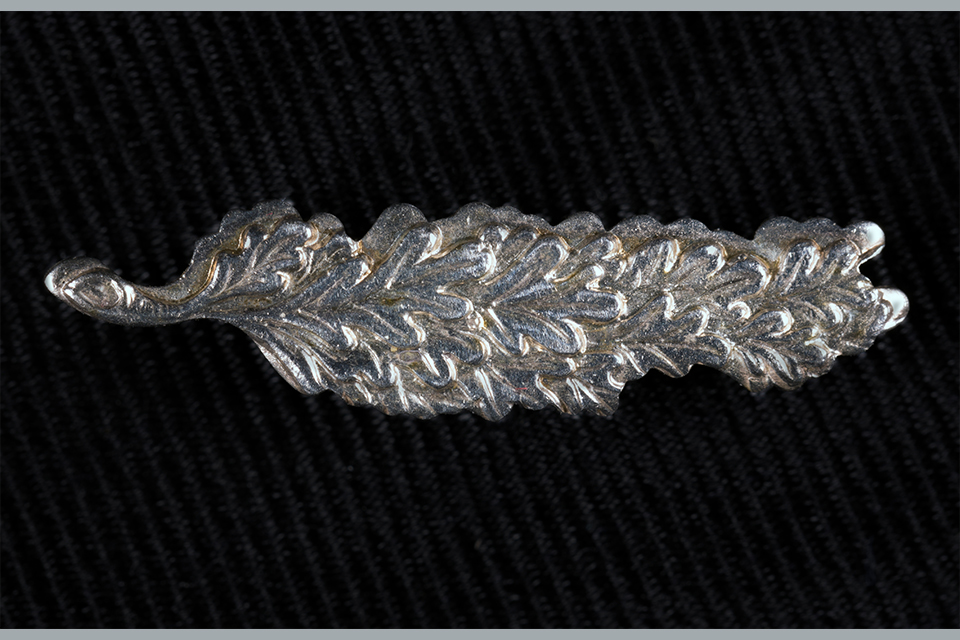
The King's Commendation for Valuable Service Award
A King’s Commendation for Valuable Service is awarded for meritorious service in an operational theatre. This award is available posthumously.
You can replace a King’s Commendation for Valuable Service if you meet the criteria.
King’s Commendation for Bravery
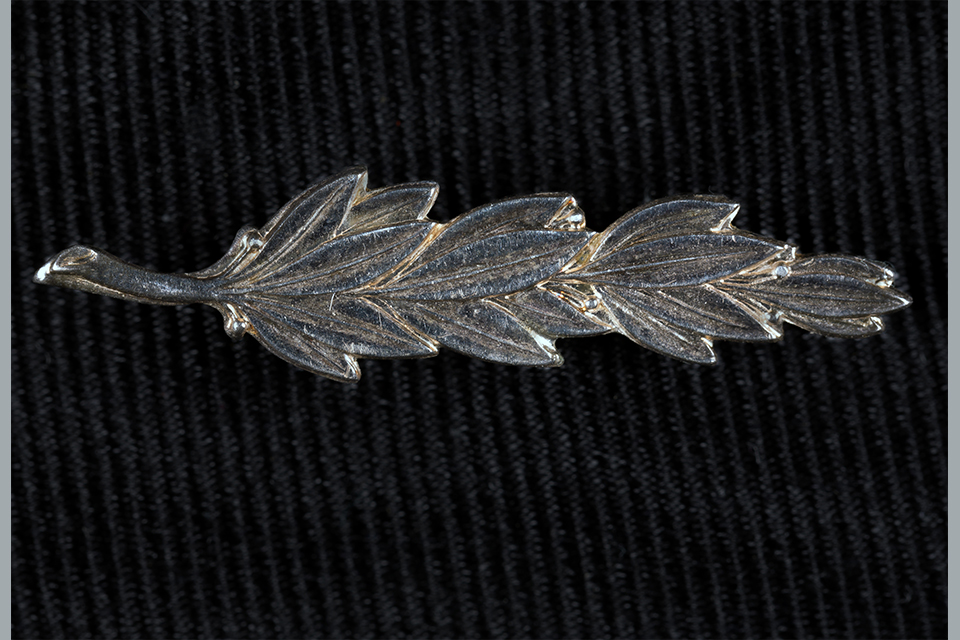
The King's Commendation for Bravery award
The King’s Commendation for Bravery is awarded for an act (or acts) of bravery not in the presence of the enemy. This award is available posthumously.
You can replace a King’s Commendation for Bravery if you meet the criteria.
King’s Commendation for Bravery in the Air
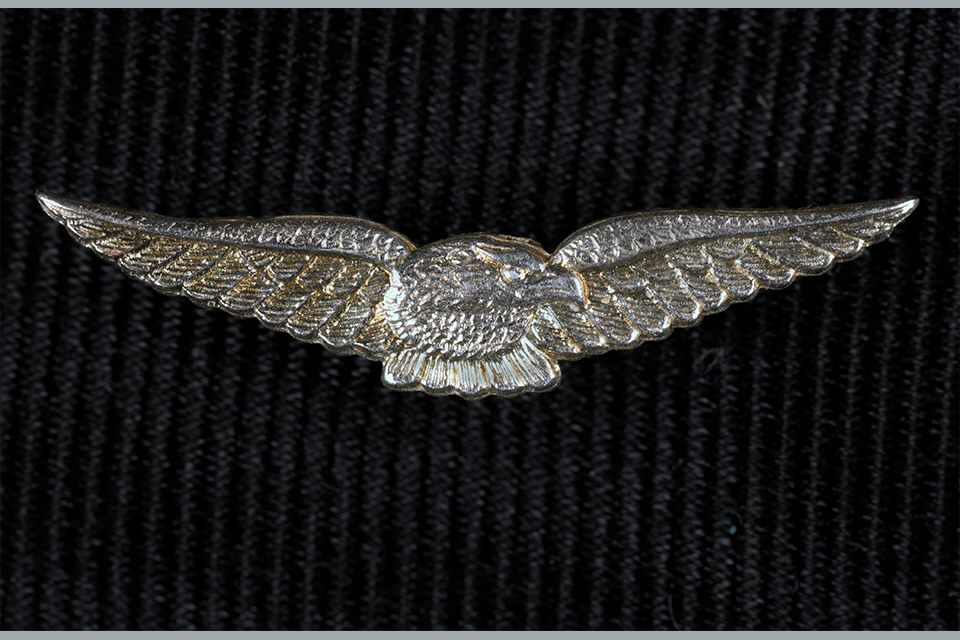
The King's Commendation for Bravery in the Air award
The King’s Commendation for Bravery in the Air is awarded for an act (or acts) of bravery while flying not in the presence of the enemy. This award is available posthumously.
You can replace a King’s Commendation for Bravery in the Air if you meet the criteria.
World War 1 medals
All World War 1 medals were issued to the recipient or next of kin after the war ended.
You can only apply if the medal was returned, and you can provide a medal card or roll which includes this information.
The MOD Medal Office does not provide replacement World War 1 medals. You can buy replicas or original named medals from a medal dealer.
1914 Star
The 1914 Star was awarded to personnel who served in France and Belgium between 5 August and 22 November 1914.
1914-15 Star
The 1914-15 Star was awarded to personnel who saw service in any theatre of war between 5 August 1914 and 31 December 1915, other than those who had already qualified for the 1914 Star.
British War Medal 1914-20
The British War Medal was awarded to personnel in recognition of the successful conclusion of World War 1. It was later extended until 1920 to cover mine-clearing services and operations in North and South Russia, the eastern Baltic, Siberia, the Black Sea and Caspian.
Victory Medal 1914-19
The Victory Medal was awarded to all personnel who received the 1914 or the 1914-15 Stars. It is often referred to as the Allied War Medal.
World War 2 Medals
You can apply for a World War 2 medal if you meet the criteria.
Nine stars were issued for the campaigns of World War 2. The colours of the ribbons have symbolic significance and are believed to have been designed personally by King George VI.
No more than five stars may be awarded to one person. The retrospective introduction of the Arctic Star in 2013, following the Sir John Holmes Independent Medal Review, meant that a sixth start could be worn. In all cases it is only the Arctic Star that is the sixth star that can be worn.
Those who qualify for more are awarded a clasp with the title of one of the stars to which they qualify. The clasp is then attached to the ribbon of one of the other stars.
If you qualify for two or three of the Atlantic, Air Crew Europe and France and Germany stars, the first star earned is awarded. You will then receive a clasp with the title of the second star earned to be worn on the ribbon of the first. A third star or clasp will not be awarded in this case.
1939 to 1945 Star
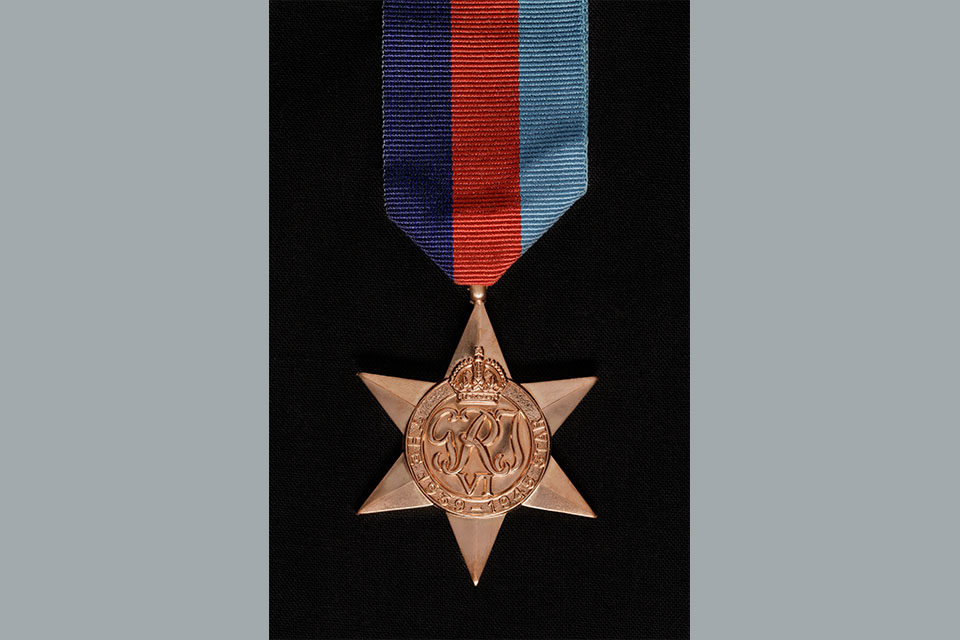
1939 to 1945 Star
The 1939 to 1945 Star is awarded to personnel who completed operational service overseas between 3 September 1939 and 8 May 1945 (2 Sept 1945 in Far East).
To apply for the 1939 to 1945 Star, you must have:
- 180 days operational service in the army in the above qualifying areas
- 180 days operational service as ground crew in the RAF in the above qualifying areas
- 60 days operational service as aircrew in the RAF in the above qualifying areas
- 180 days service afloat in operational areas in the Royal Navy in the above qualifying areas
The colours of the ribbon represent the three services. The star is worn with the dark blue stripe furthest from the left shoulder.
Recipients of the 1939-45 Star may also be eligible for:
- Battle of Britain Clasp
- Bomber Command Clasp
Clasps are worn on the ribbon of the 1939 to 1945 Star.
To apply for the Battle of Britain Clasp to the 1939-45 Star, you must have:
- served as aircrew on a fighter aircraft
- been engaged in the Battle of Britain between 10 July 1940 and 31 October 1940
To apply for the Bomber Command Clasp to the 1939-45 Star, you must have:
- served as aircrew with a UK based Bomber Command Unit
- served between 3 September 1939 and 8 May 1945
Atlantic Star
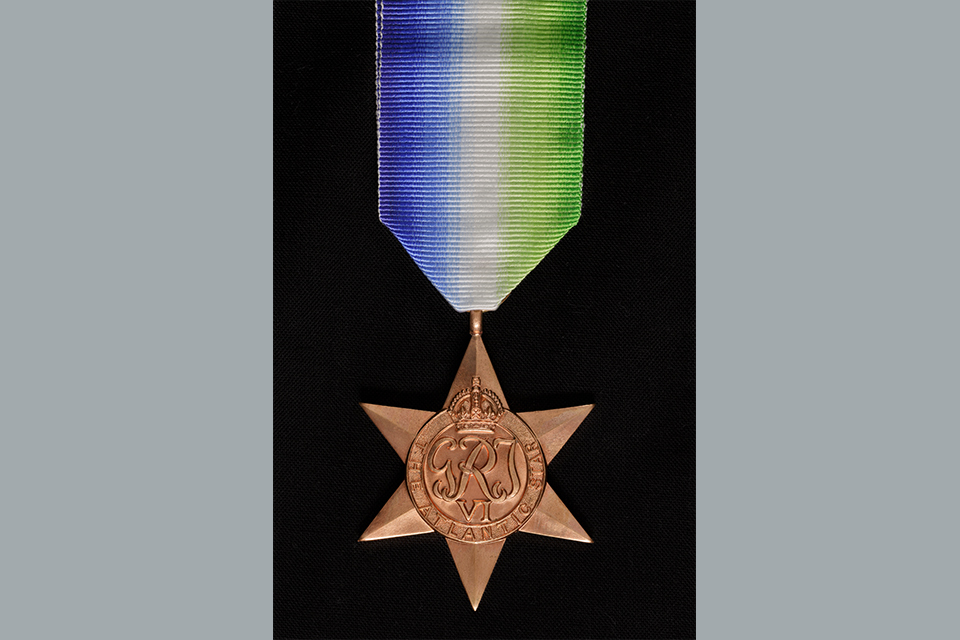
The Atlantic Star
The Atlantic Star is awarded for operational service in the Atlantic and home waters between 3 September 1939 and 8 May 1945 (2 September 1945 in Far East).
To apply for the Atlantic Star, you must have already qualified for the 1939 to 1945 Star and have an additional:
- 180 days operational service or any 6 months afloat in the army in the above qualifying areas
- 180 days operational service afloat as ground crew in the RAF in the above qualifying areas
- 60 days operational service as aircrew in the RAF in the above qualifying areas
- 180 days afloat in operational areas in the Royal Navy in the above qualifying areas
The colours of ribbon represent the Atlantic Ocean. The Atlantic Star is worn with the blue edge furthest from the left shoulder.
Air Crew Europe Star
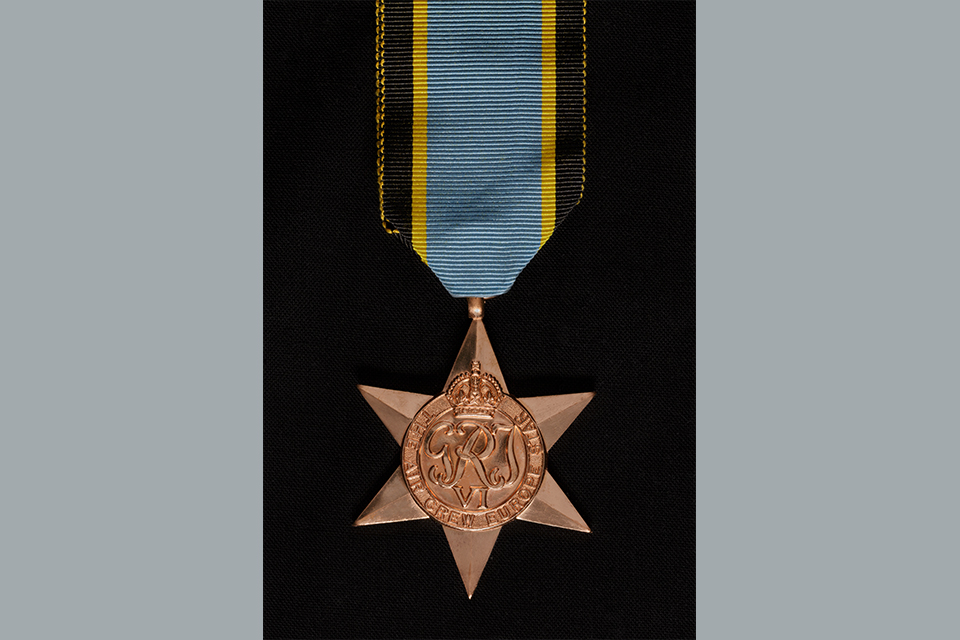
Air Crew Europe Star
The Air Crew Europe Star is earned almost exclusively by RAF personnel for operational flying from UK bases over Europe between 3 September 1939 and 5 June 1944.
To apply for the Air Crew Europe Star, you must have already qualified for the 1939 to 1945 Star and have an additional:
- 60 days operational flying in the army in the above qualifying areas
- 60 days operational flying for the RAF in the above qualifying areas
- 60 days operational flying for the Royal Navy in the above qualifying areas
The ribbon colours of the ribbon represent the sky, night flying and enemy searchlights to symbolise the continuous service of the Air Force by night and day.
Arctic Star
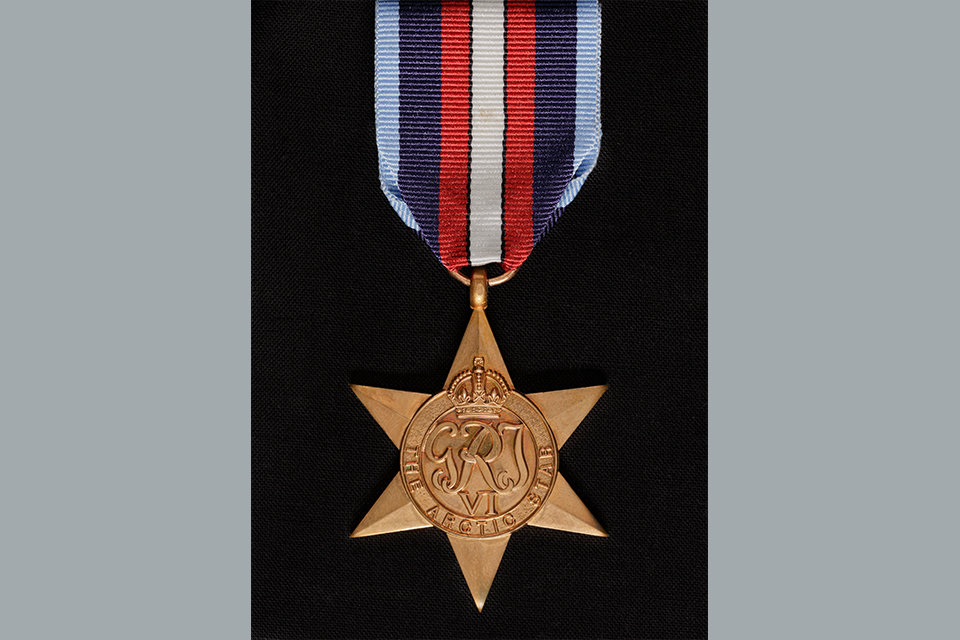
Arctic Star
The Arctic Star is awarded for operational service of any length north of the Arctic Circle (66, 32 N) between 3 September 1939 and 8 May 1945. The Arctic Star commemorates the Arctic Convoys that sailed to North Russia in support of the Russian allies.
To apply for the Arctic Star, you must have:
- service of any length either afloat or as part of land operations north of the Arctic Circle in the army, Royal Navy, Merchant Navy, and RAF ground crew
- service of any length as RAF aircrew who landed or served in the air north of the Arctic Circle
- approved civilians who served in support of military operations north of the Arctic Circle
Africa Star
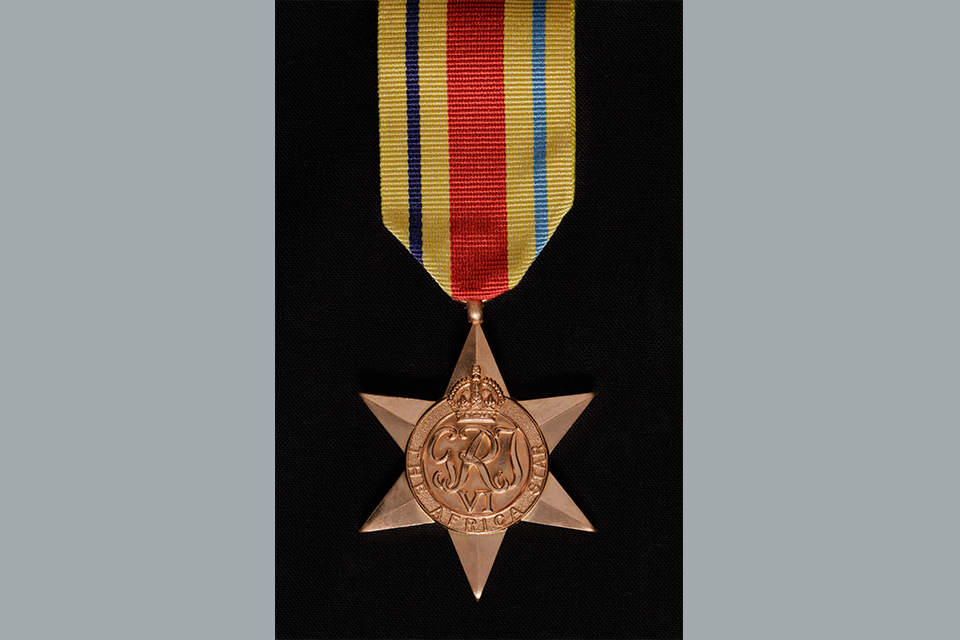
Africa Star
The Africa Star is awarded to personnel who served in North Africa, Malta or Egypt between 10 June 1940 and 12 May 1943.
To apply for the Africa Star, you must have:
- one day of operational service in the army in the above qualifying areas
- one day of operational service as ground crew in the RAF in the above qualifying areas
- one operational sortie as aircrew in the RAF in the above qualifying areas
- one day afloat in the Mediterranean in the Royal Navy
The colours of the ribbon symbolise the desert and the three services.
Pacific Star: Malaya, Singapore and the Pacific Ocean
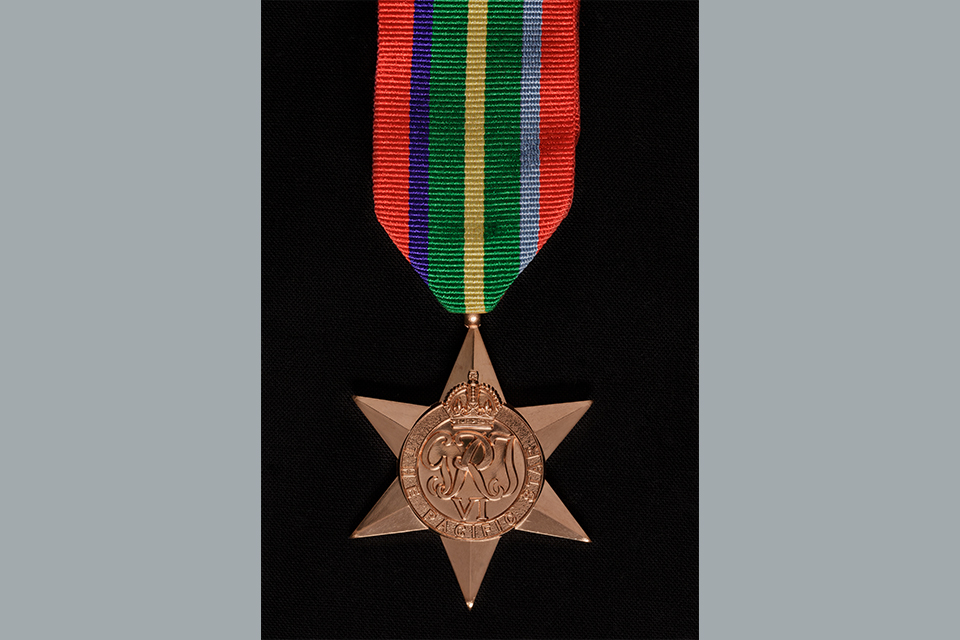
The Pacific Star
The Pacific Star is awarded for operational service in Malaya, Singapore, China, Hong Kong or Sumatra between 8 December 1941 and 2 September 1945.
To apply for the Pacific Star, you must have:
- one day of operational service in the army in the above qualifying areas
- one day of operational service as ground crew in the RAF in the above qualifying areas
- one operational sortie as aircrew in the RAF in the above qualifying areas
- one day afloat on operational service in the above qualifying areas in the Royal Navy and already qualified for the 1939 to 1945 Star
The colours of the ribbon represent the jungle, the beaches and the three services.
If you also qualify for the Burma Star, you will only be awarded the first star you earned. You will then receive a clasp with the title of the second star earned, which is worn on the ribbon of the first.
Burma Star
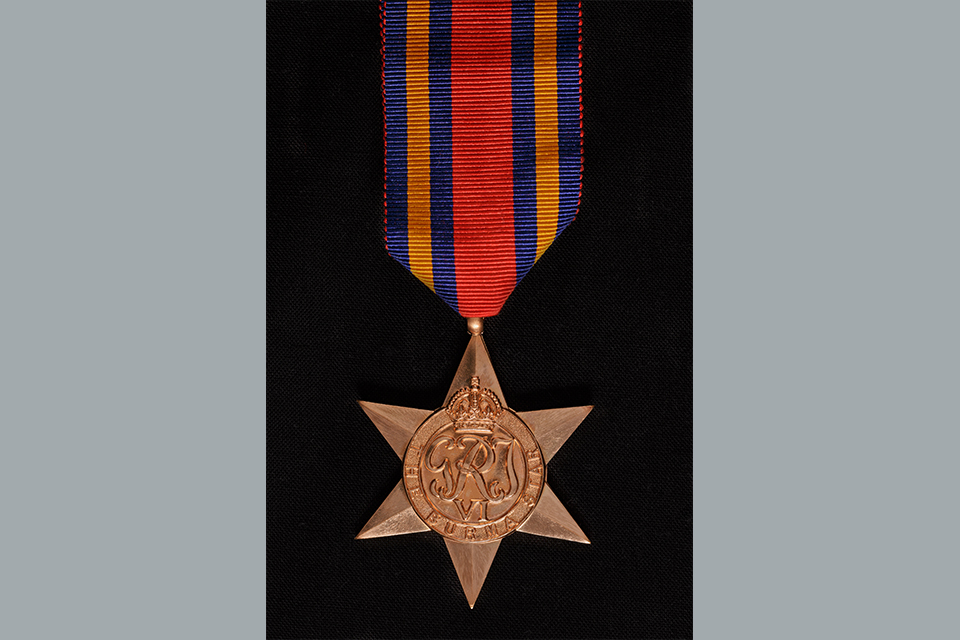
The Burma Star
The Burma Star is awarded for operational service in Burma between 11 December 1941 and 2 September 1945. Those serving in Bengal and Assam in India and China, Hong Kong, Malaya or Sumatra between other specified dates may also qualify.
To apply for the Burma Star, you must have:
- one day of operational service in the army in the above qualifying areas
- one day of operational service as ground crew in the RAF in the above qualifying areas
- one operational sortie as aircrew in the RAF in the above qualifying areas
- one day afloat on operational service in the above qualifying areas in the Royal Navy and already qualified for the 1939 to 1945 Star
The colours of the ribbon represent the sun, British and Commonwealth forces.
If you also qualify for the Pacific Star, you will only be awarded the first star earned. You will then receive a clasp with the title of the second star earned which is worn on the ribbon of the first.
Italy Star
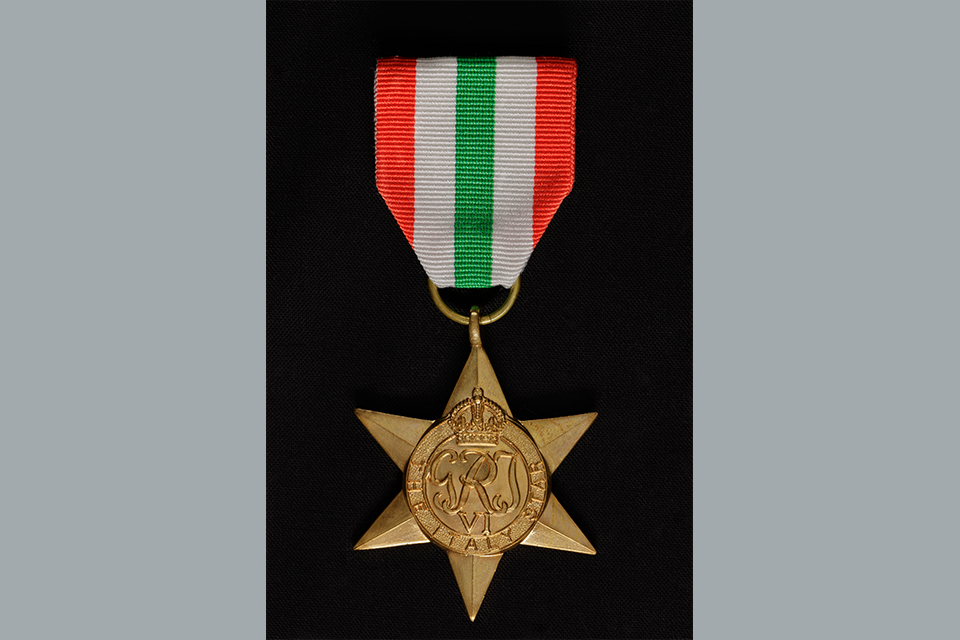
The Italy Star
The Italy Star is awarded for operational service in Sicily or Italy between 11 July 1943 and 8 May 1945. Those who served in Yugoslavia, Greece, Corsica or Sardinia between certain other specified dates will also qualify.
To apply for the Italy Star, you must have:
- one day of operational service in the army in the above qualifying areas
- one day of operational service as ground crew in the RAF in the above qualifying areas
- one operational sortie as aircrew in the RAF in the above qualifying areas
- one day afloat on operational service in the above qualifying areas in the Royal Navy and already qualified for the 1939 to 1945 Star
The colours of the ribbon represent the national colours of Italy.
France and Germany Star
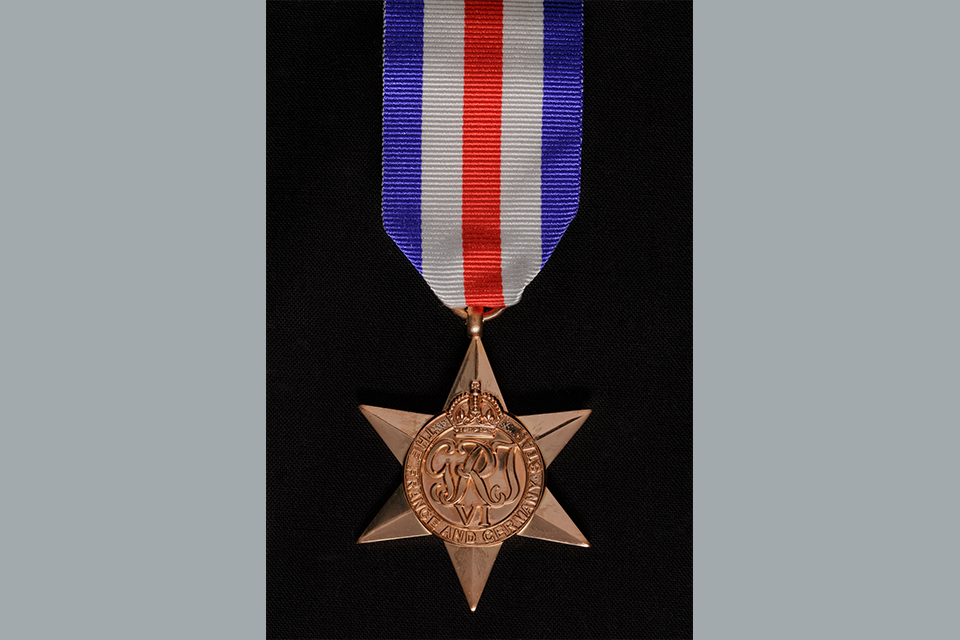
The France and Germany Star
The France and Germany Star is awarded for operational service in France, Belgium, Luxembourg, The Netherlands or Germany between 6 June 1944 and 8 May 1945.
To apply for the France and Germany Star, you must have:
- one day of operational service in the army in the above qualifying areas
- one day of operational service as ground crew in the RAF in the above qualifying areas
- one operational sortie as aircrew in the RAF in the above qualifying areas
- one day afloat in operational areas of the North Sea in the Royal Navy (provided service was directly in support of land operations)
The colours of the ribbon represent the national colours of the United Kingdom, France and The Netherlands.
Defence Medal
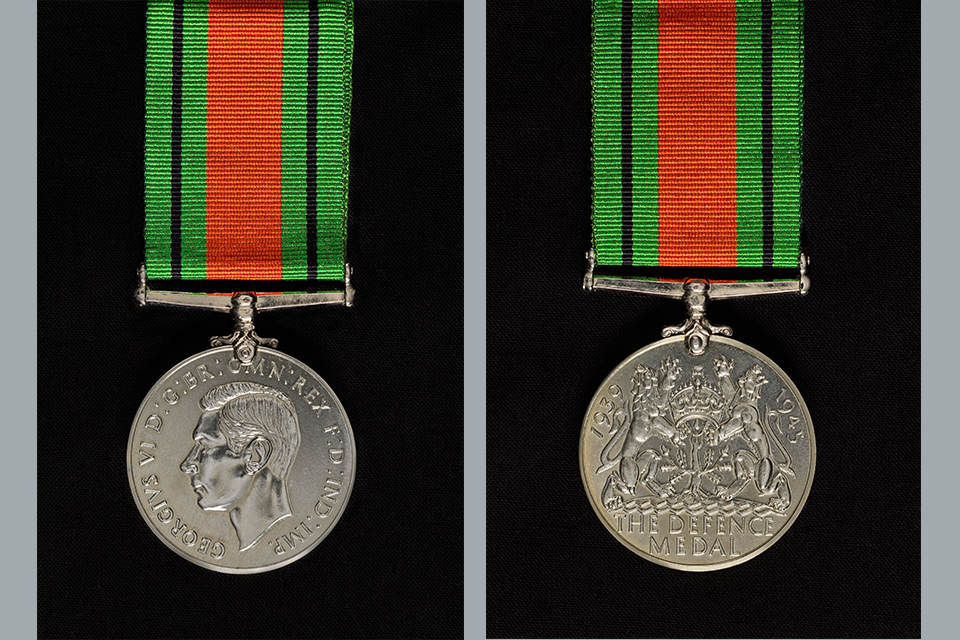
The Defence Medal front and back
The Defence Medal is awarded for non-operational service such as those service personnel working in headquarters, on training bases and airfields and members of the Home Guard. The medal is also awarded for non-operational service overseas for example in India or South Africa.
To apply for the Defence Medal, you must have either:
- 1080 days (3 years) service in the UK between 3 Sep 1939 and 8 May 1945
- 1080 days (3 years) service in the Home Guard between 14 May 1940 and 31 Dec 1944 (you will also need to fill out and send the Home Guard service questionnaire)
- 360 days (1 year) non operational service overseas between 3 Sep 1939 and 2 Sep 1945
- 180 days non operational service in an overseas area deemed to be closely threatened or subject to air attack between 3 September 1939 and 8 May 1945
The colours of the ribbon symbolise enemy attacks on Britain’s ‘green and pleasant land’ and the black out.
War Medal 1939 to 1945
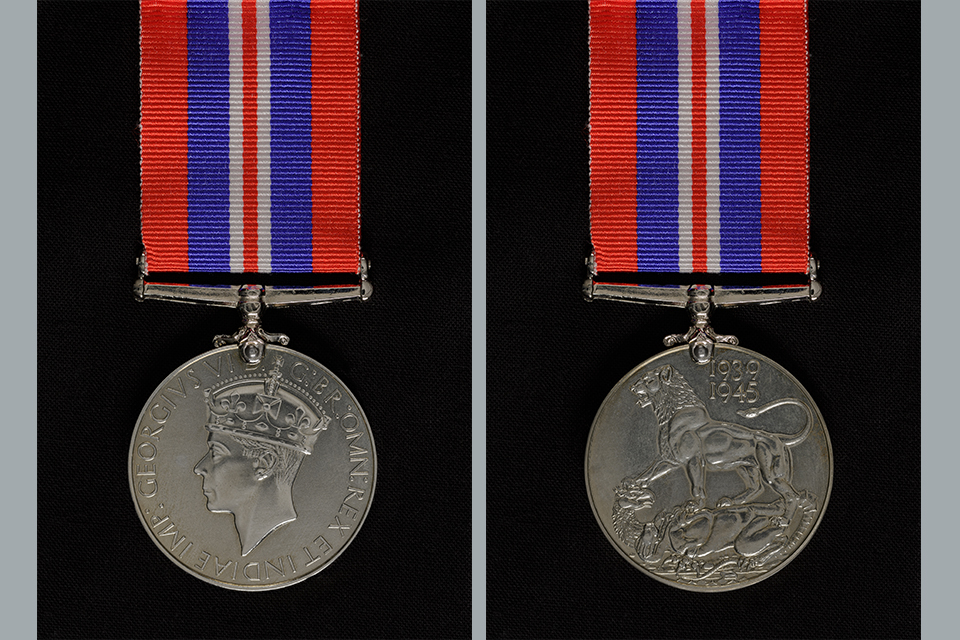
War Medal 1939 to 1945 front and back
The War Medal is awarded to all full time personnel of the armed forces wherever they were serving. The medal was granted in addition to campaign stars and the Defence Medal.
To apply for the War Medal, you must have served at least 28 days between 3 September 1939 and 2 September 1945.
The colours of the ribbon represent the Union Jack.
Legion d’Honneur
The Legion d’Honneur is issued by the French Government to commemorate the 70th anniversary of the Normandy Landings.
This medal is not issued by the MOD Medal Office. Find out how you can apply for the Legion d’Honneur.
Post World War 2 campaign medals
General Service Medal 1918-62
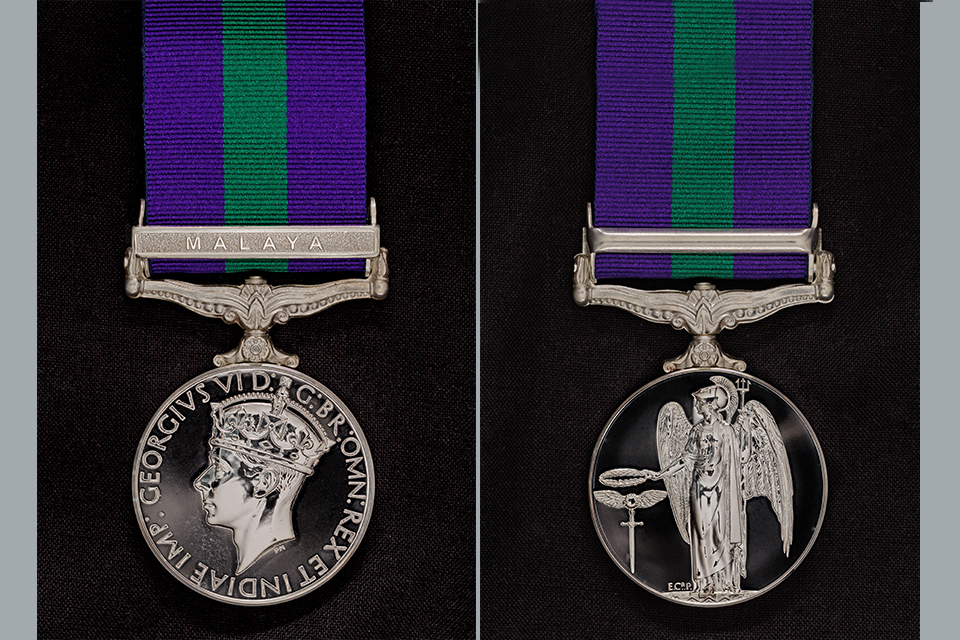
General Service Medal 1918 to 1962 with Malaya clasp front and back
The General Service Medal (GSM) 1918-1962 was awarded to army and RAF personnel who meet the qualifying criteria for service in any of the following geographical areas:
- South Persia
- Kurdistan
- Iraq
- North West Persia
- Southern Desert Iraq
- Northern Kurdistan
- Palestine
- South East Asia 1945 to 1946
- Palestine 1945 to 1948
- Malaya
- Cyprus
- Near East
- Arabian Peninsula
- Brunei
- Canal Zone
The medal is also awarded for:
- Bomb and Mine Clearance 1945 to 1949
- Bomb and Mine Clearance 1945 to 1956
- Berlin Airlift
If you think you might be eligible, contact the MOD Medal Office.
If your application is successful, you’ll be awarded the GSM with a clasp for the relevant geographical area.
If you become eligible for a further clasp, you will not get a second medal. The clasp should be added to the GSM medal ribbon, worn above the first clasp.
Naval General Service Medal 1915
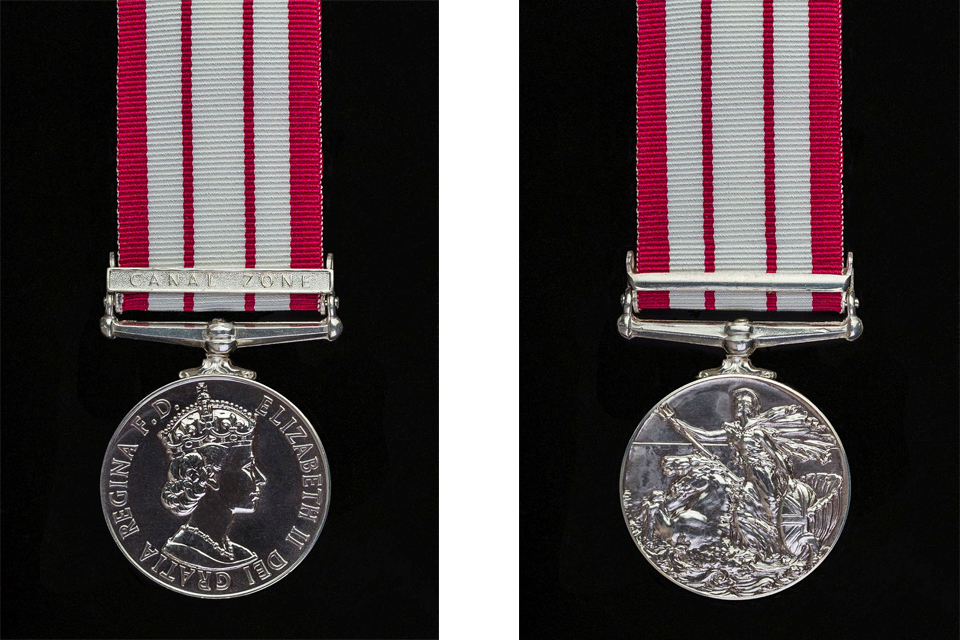
Naval General Service Medal 1915 - front and back
The Naval General Service Medal (GSM) 1915 was awarded to Royal Navy and Royal Marine personnel who meet the qualifying criteria for service in any of the following geographical areas:
- Palestine 1936-1939
- South East Asia 1945-46
- Palestine 1945-48
- Malaya
- Yangtze 1949
- Canal Zone
- Cyprus
- Near East
- Arabian Peninsula
- Brunei
The medal is also awarded for:
- Minesweeping 1945-51
- Bomb and Mine Clearance 1945-49
- Bomb and Mine Clearance 1945-53
- Bomb and Mine Clearance Mediterranean
- Berlin Airlift
If you think you might be eligible, contact the MOD Medal Office.
If your application is successful, you’ll be awarded the Naval GSM with a clasp for the relevant geographical area.
If you become eligible for a further clasp, you will not get a second medal. The clasp should be added to the Naval GSM medal ribbon, worn above the first clasp.
The Africa General Service Medal with Kenya Clasp
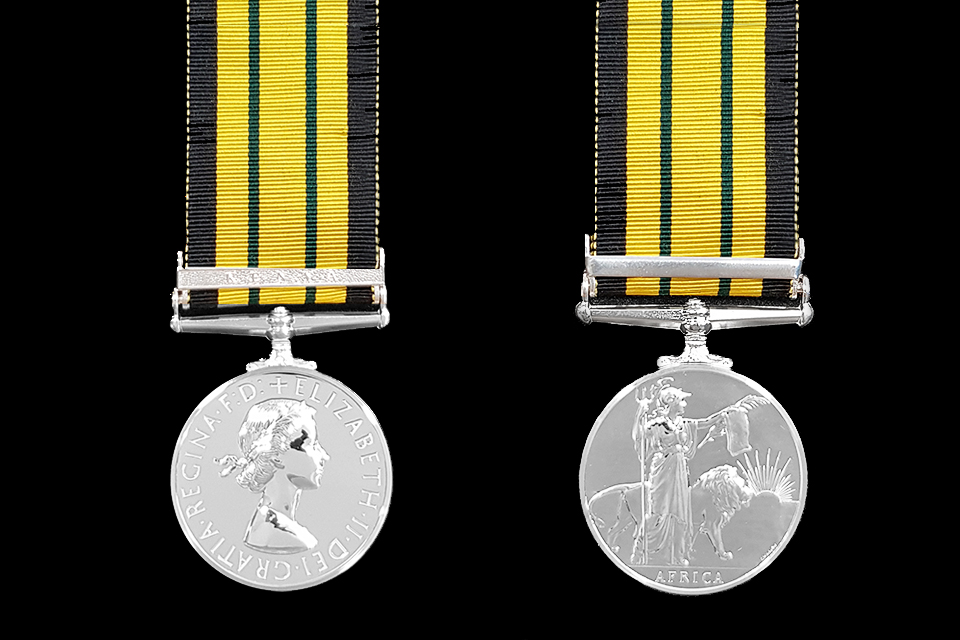
Africa Medal - Front and back
The Africa Medal with Kenya Clasp is awarded for 91 days or more service within designated operational areas in Kenya.
To apply for the Africa General Service Medal With Kenya Clasp, you must have
- 91 days or more service in Kenya during the period 21st October 1952 and 17th November 1956 inclusive.
Korea Medal
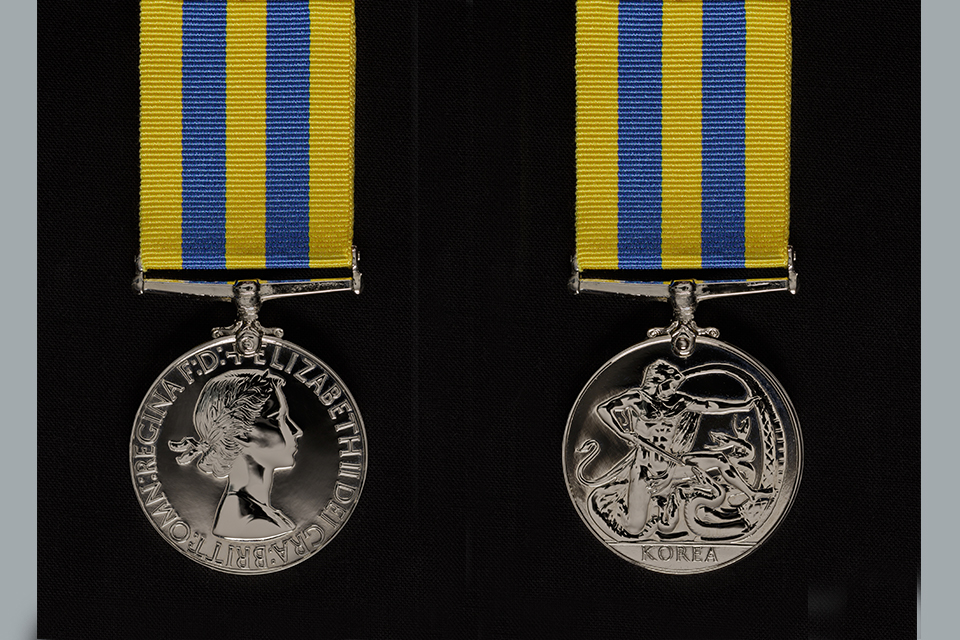
The Korea Medal front and back
The Korea Medal is awarded to personnel who participated in the Korean War between 2 July 1950 and 27 July 1953.
To apply for the Korea Medal, you must have either:
- 1 day of service on land in Korea in the army, RAF or Royal Navy
- 1 operational sortie over Korea or Korean Waters in the RAF
- 28 days service afloat on ships or crafts engaged in operations off the Korean coast in the Royal Navy
General Service Medal 1962-2007
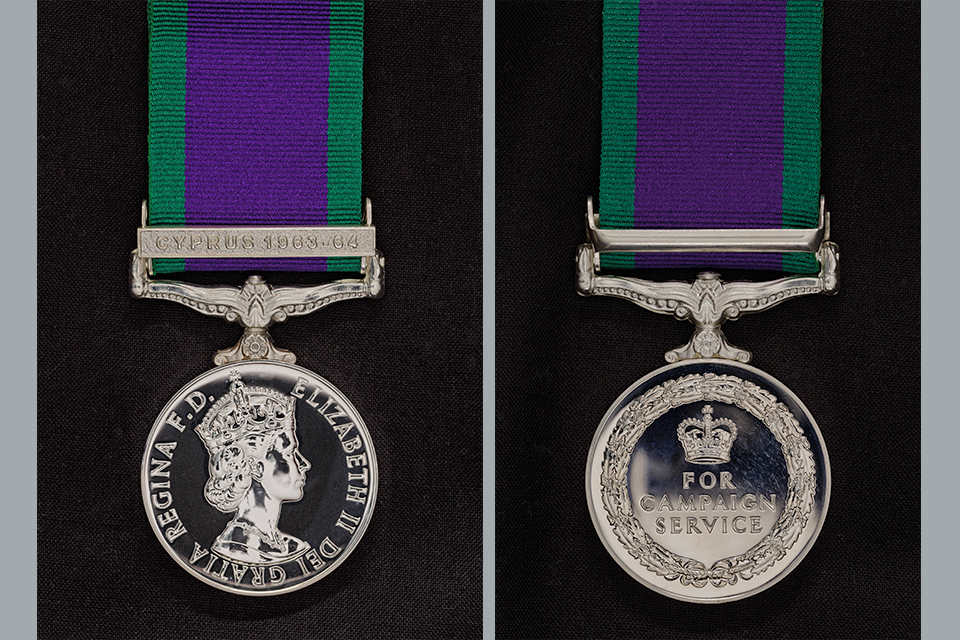
The General Service Medal 1962 to 2007 with Cyprus clasp front and back
The General Service Medal (GSM) 1962-2007 is awarded to army, RAF, Royal Navy and Royal Marines personnel who meet the qualifying criteria for service in any of the following geographical areas:
- Borneo
- Cyprus 1963-64
- Radfan
- South Arabia
- Malay Peninsula
- Northern Ireland
- Dhofar
- Lebanon
- Gulf
- Kuwait
- North Iraq and South Turkey
The medal is also awarded for:
- Mine Clearance: Gulf of Suez
- Air Operations Iraq
If you think you might be eligible, contact the MOD Medal Office.
If your application is successful, you’ll be awarded a GSM with a clasp for the relevant geographical area. If you become eligible for a further clasp, you will not get a second medal. The clasp should be added to the GSM ribbon, worn above the first clasp.
Pingat Jasa Malaysia Medal
The Pingat Jasa Malaysia (PJM) Medal is issued by the Malaysian Government to members of the British and Commonwealth armed forces for service of 90 days or more in Malaysia and Singapore. The qualifying dates are:
- Malaysia during the period 31 August 1957 and 12 August 1966 inclusive
- Singapore during the period 3 August 1957 and 9 August 1965 inclusive
Applications for the PJM Medal are processed by the Malaysian Government. All applications must be endorsed an official organisation such as the Ministry of Defence or veterans associations before the medal can be issued.
The MOD Medal Office can endorse an application for the PJM Medal. If you think you might be eligible, complete the and send to the MOD Medal Office for endorsement.
The PJM Medal is not issued by the MOD Medal Office.
South Atlantic Medal
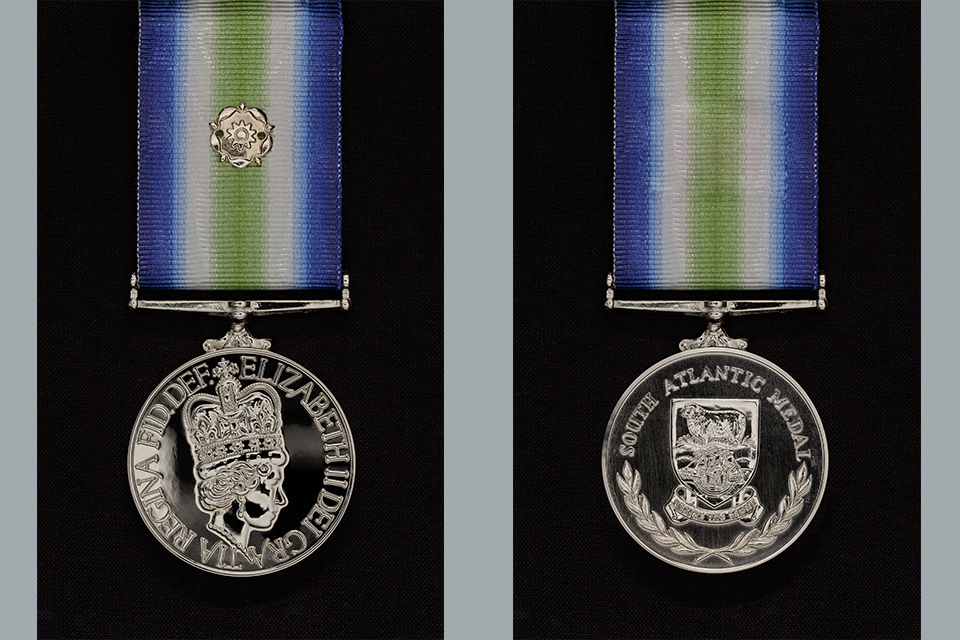
The South Atlantic medal front and back
The South Atlantic Medal was awarded for service in the Falklands Islands, the dependencies, or in the South Atlantic between 2 April 1982 and 14 June 1982.
To apply for the South Atlantic Medal and rosette , you must have either:
- one day of service in the Falkland Islands or their dependencies, or in the South Atlantic, south of 35 south and north of 60 south before 14 June 1982
- one operational sortie south of Ascension Island before 14 June 1982
To apply for the South Atlantic Medal without the rosette, you must have:
- 30 days service or more in the South Atlantic, south of 7 south and north of 60 south
- completed service no later than 21 October 1982
The colours of the ribbon symbolise the Atlantic Ocean.
Gulf Medal 1990-1991
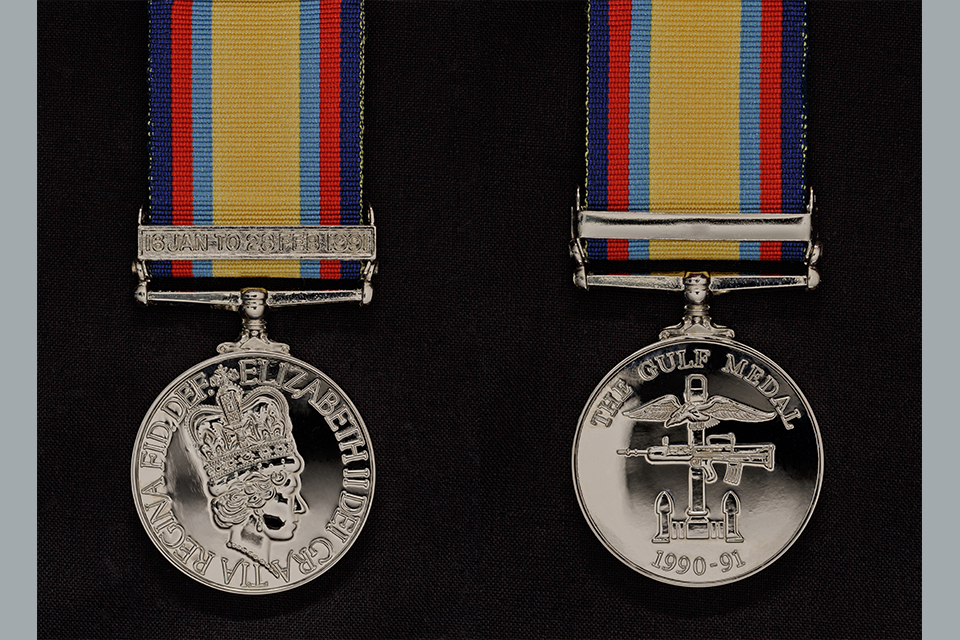
Gulf War Medal with 16 Jan to 28 February 1991 Clasp front and back
The Gulf Medal was awarded to personnel for service in the areas of operations in the Middle East.
To apply for the Gulf medal only, you must have:
- 30 days continuous service between 2 August 1990 and 7 March 1991
- served in the area of operations as defined in the regulations
To apply for the medal with clasp ’16 Jan to 28 Feb 1991’, you must have:
- seven days continuous service between 16 Jan and 28 Feb 1991
- served in the area of operations as defined in the regulations
To apply for the medal with clasp ‘2 Aug 1990’, you must have:
- been a member of the Kuwait Liaison Team
- served in Kuwait on 2 August 1990
The colours of the ribbon represent the desert landscape and the three services.
Kuwaiti Liberation Medal and the Saudi Liberation of Kuwait Medal
The governments of Kuwait and Saudi Arabia issued these medals to the allied personnel who had taken part in the liberation of Kuwait.
The Queen granted permission for British service personnel to accept but not wear these medals.
Operational Service Medal - Iraq and Syria
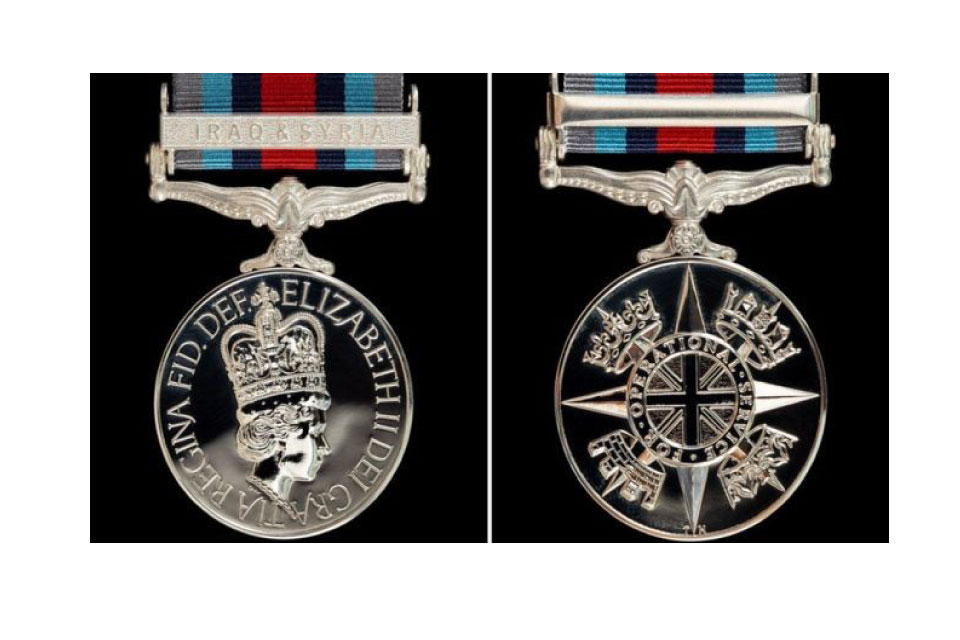
Operational Service medal in Iraq and Syria
The Operational Service Medal (OSM) Iraq and Syria is awarded to personnel who completed operational service in or over the landmass of Iraq and Syria, or provided a significant and direct contribution outside of Iraq and Syria, to Operation SHADER since 9 August 2014 (end date to be decided).
To apply for the Operational Service Medal - Iraq and Syria with clasp Iraq and Syria you must have either:
- 30 days continuous or 45 days cumulative operational service in the international boundaries of Iraq and Syria
- 10 operational sorties over Iraq and/or six operational sorties over Syria with the RAF
To apply for the Operational Service Medal Iraq and Syria, without clasp Iraq and Syria you must have either:
- 50 hours on an Operation SHADER mission as an RPAS pilot, sensor or mission intelligence coordinator
- 45 days continuous or 60 days cumulative service with significant support or direct contribution to Op SHADER with specific units and specified locations, which include Al Udeid, Crete, Cyprus, Jordan, Kuwait and Turkey
The Iraq and Syria clasp is to be worn on the ribbon of this medal, denoting the risk and rigour of the task. The colours of the ribbon represent the large number of airframes used in the operation, and the three services.
Operational Service Medal – Sierra Leone
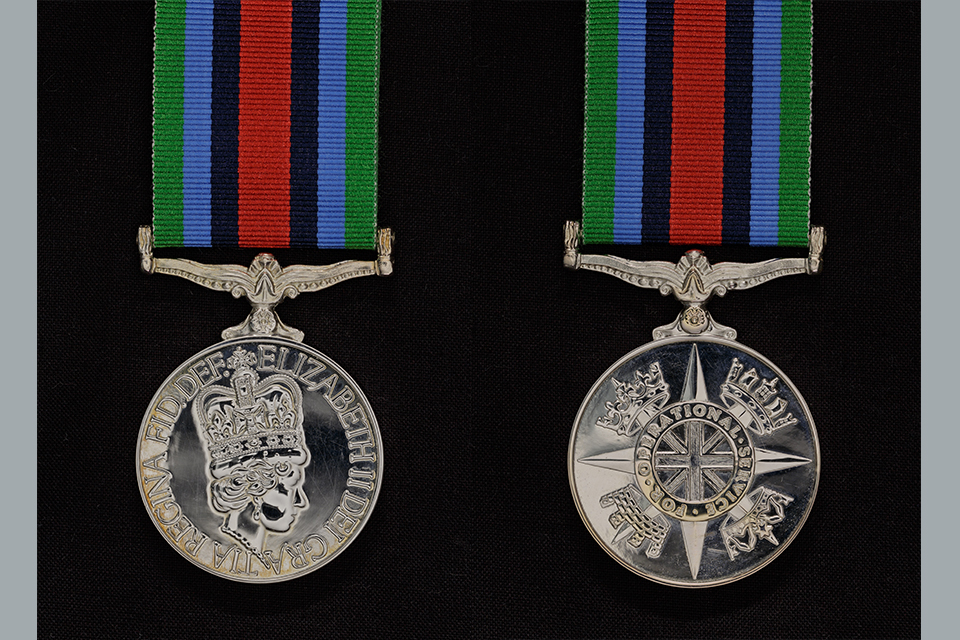
Sierra Leone Medal
The Operational Service Medal (OSM) Sierra Leone is awarded to personnel who completed operational service in Sierra Leone or the Joint Operational Area between 5 May 2000 to 31 July 2002.
To apply for the Operational Service Medal - Sierra Leone, you must have either:
- one day of service on Op Barras or Op Maidenley
- 14 days continuous or accumulated service on Op Palliser
- 30 days continuous or accumulated service on Op Basillica or Silkman
A silver rosette may be issued for service on Operations Maidenly and Barras. The rosette is worn on the ribbon of the OSM.
The colours of the ribbon represent the jungle and the three services.
Operational Service Medal – Afghanistan
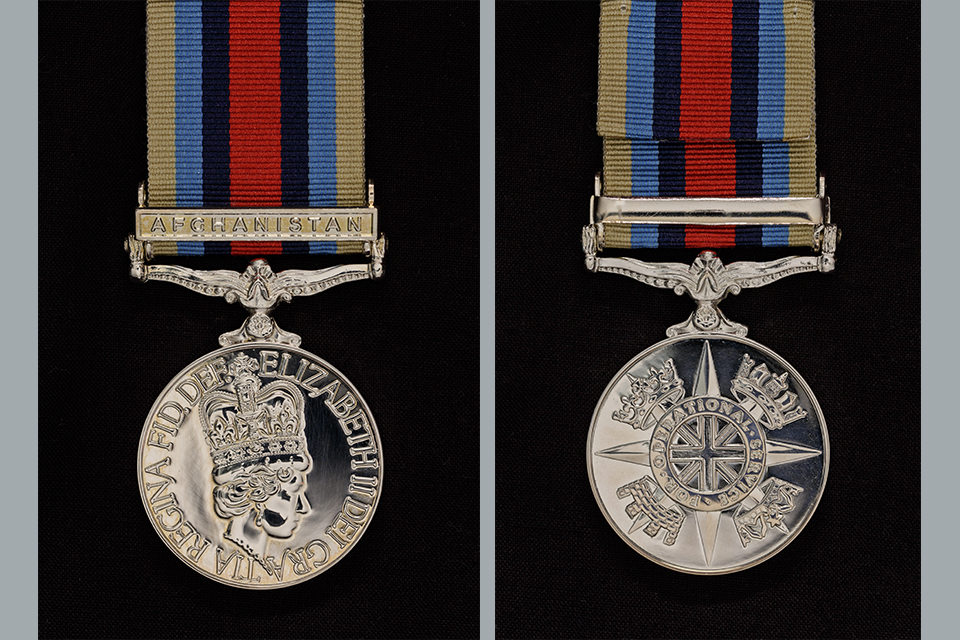
The Afghanistan Medal with Clasp front and back
The Operational Service Medal (OSM) Afghanistan is awarded to personnel who complete operational service on or in support of, operations in Afghanistan from 11 September 2001.
You’ll automatically receive the medal if you’re currently serving and have deployed on a current operation, you don’t need to apply. If you have not received your medal and think you might be entitled, speak to your Unit HR.
To apply for the Operational Service Medal - Afghanistan, you must have:
- served under the command of the UK Joint Task Force Commander
- 30 days continuous service or 45 days aggregated service
- served in either Zone 1 or Zone 2 (service in Zone 1 will be recognised with a clasp to the OSM)
- Those in support of Op Pitting who have completed either five days of service or three air sorties between the 14th and the 28th of August 2021 are entitled to the Op Pitting Clasp
The colours of the ribbon represent the landscape of Afghanistan and the three services.
Operational Service Medal – Democratic Republic of Congo
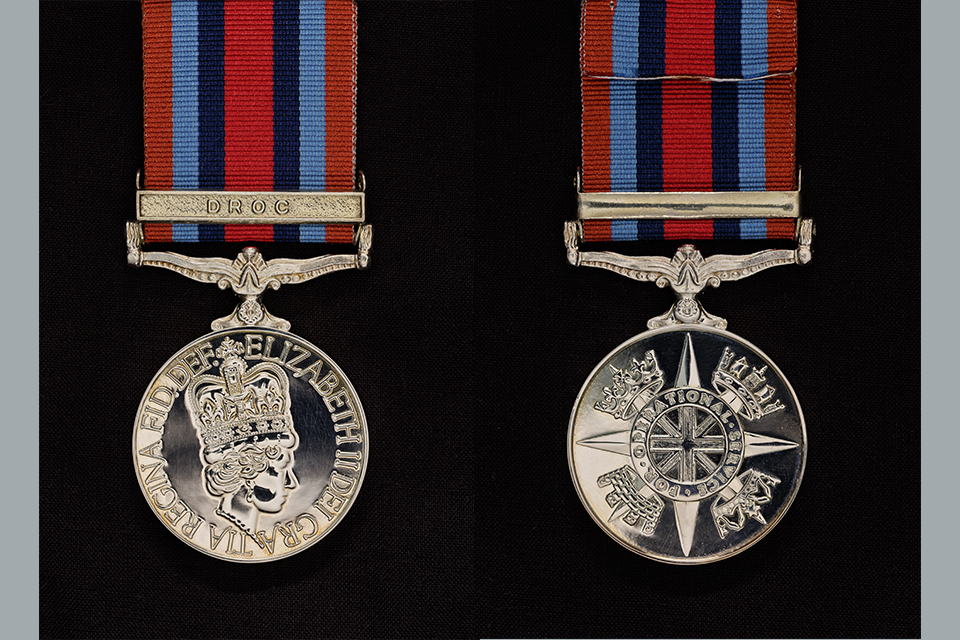
The Democratic Republic of the Congo Medal
The Operational Service Medal (OSM) Democratic Republic of Congo (DROC) is awarded to personnel who completed operational service in Bunia in the Ituri Province in the Democratic Republic of Congo between 14 June and 10 September 2003.
To apply for the Operational Service Medal - DROC, you must have either:
- 25 days operational service
- five operational sorties with the RAF
The Operational Service Medal will be issued with a DROC clasp which should be worn on the ribbon.
The colours of the ribbon represent the landscape of DROC and the three services.
Iraq Medal
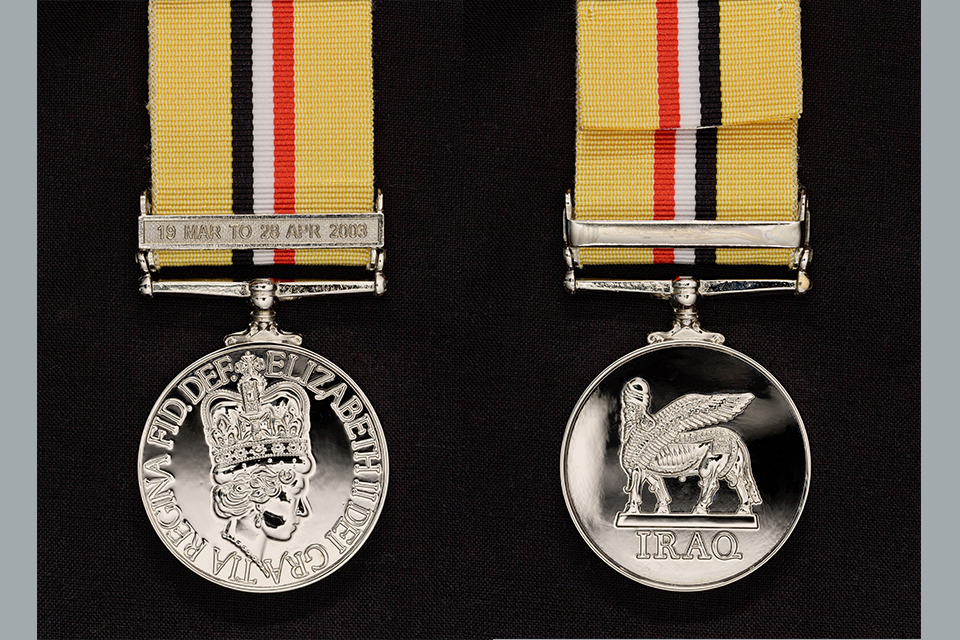
The Iraq Medal with 19 Mar to 28 Apr 2003 Clasp front and back
The Iraq medal is awarded to personnel who completed operational service in Iraq between 20 January 2003 and 22 May 2011.
To be considered for the medal with clasp ’19 Mar – 28 Apr 03’, you must have:
- served in Zone One between 19 March 03 and 28 April 03
- completed seven days continuous service, or
- served as aircrew flying into Zone One and completed two or more operational sorties (no more than one sortie per day)
To be considered for the medal only, you must have:
- completed 30 days continuous service in either Zone One or Zone Two, or
- served as aircrew flying into Zones One or Two, or
- served as aircrew based outside of Iraq and completed 10 operational sorties (no more than 1 sortie per day) *End dates vary between zones or activities, so please check with the MOD Medal Office
The clasp is to be worn on the ribbon of the medal. The colours of the ribbon represent the Iraq landscape.
Criteria for this medal is complex and the above is a guide only. If you think you might be eligible, contact the MOD Medal Office.
General Service Medal 2008
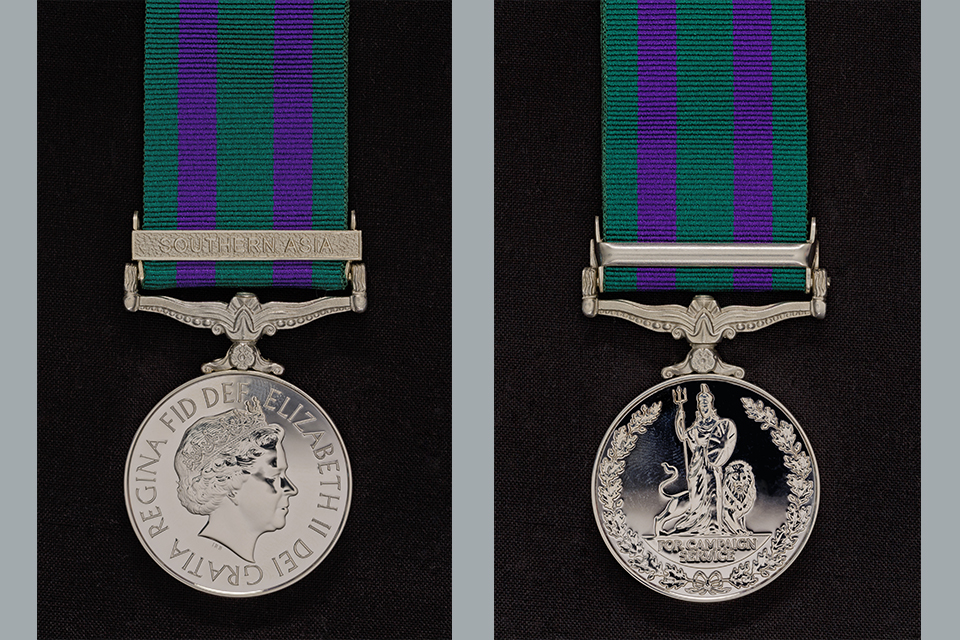
The General Service Medal 2008 Medal with Southern Asia Clasp front and back
The General Service Medal (GSM) 2008 is awarded to army, RAF, Royal Navy and Royal Marines personnel who served on operations from 1 January 2008 in the following geographical areas:
- Eastern Africa
- Western Africa
- Arabian Peninsula
- Northern Africa
- Southern Asia
- Gulf of Aden
In order to qualify for the above clasps, specific criteria must be met. You’ll automatically receive the medal if you’re currently serving and are eligible, you don’t need to apply. If you have not received your medal and think you might be entitled, speak to your Unit HR.
Veterans or Next of Kin should apply to the MOD Medal Office.
If your application is successful, you’ll be awarded the GSM with a clasp for the relevant geographical area.
If you become eligible for further clasp, you will not get a second medal. The clasp should be added to the GSM medal ribbon, worn above the first clasp.
It is expected that further operations and clasps will be added to the GSM 08 as time progresses. The Permanent Joint Headquarters (PJHQ) decides which operations qualify for the GSM 08, not the MOD Medal Office.
Ebola Medal
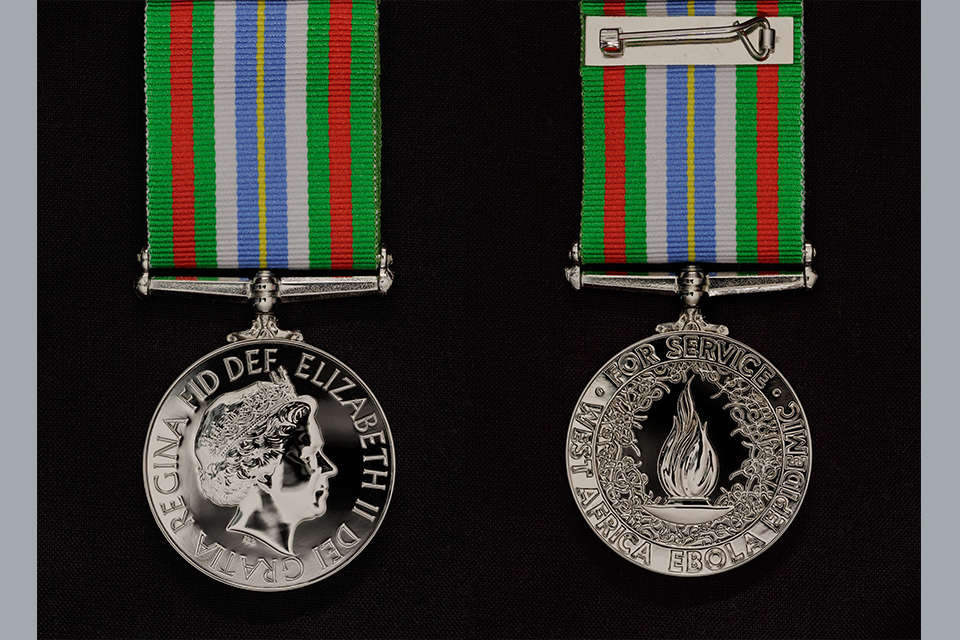
Ebola Medal for service in West Africa front and back
The Ebola Medal is awarded for service in the Joint Operational Area within West Africa between 23 March 2014 and 29 March 2016.
Applications for the Ebola Medal are no longer being processed.
Jubilee medals
HM The Queen’s Silver Jubilee Medal 1977
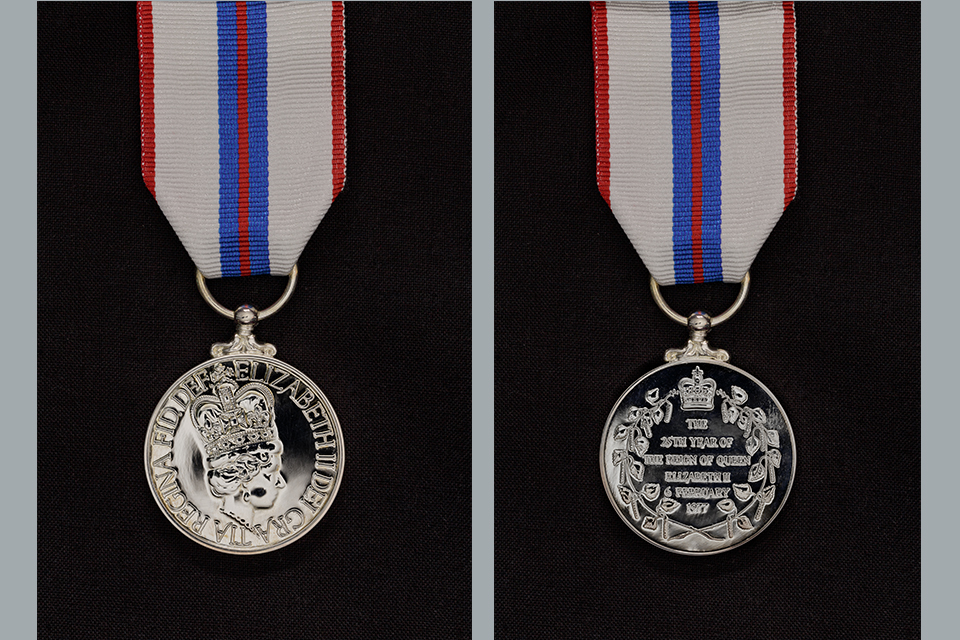
HM The Queen's Silver Jubilee Medal
The Silver Jubilee Medal was awarded to personnel to celebrate the 25th anniversary of Queen Elizabeth II accession.
The MOD Medal Office no longer issues this medal.
HM The Queen’s Golden Jubilee Medal 2002
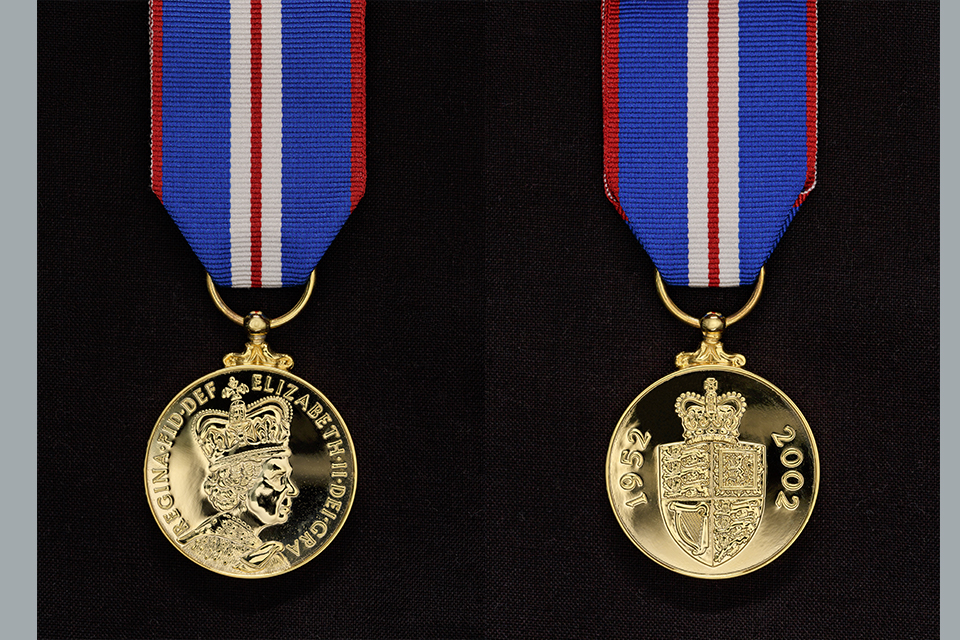
HM The Queen's Golden Jubilee Medal
The Golden Jubilee Medal was awarded to personnel to celebrate the 50th anniversary of Queen Elizabeth II accession.
To apply for the Queen’s Golden Jubilee Medal, you must:
- have been in effective service on 6 February 2002 and
- completed a minimum of five years reckonable service and were enlisted on or before 7 February 1997 and
- served with the regular, reserve or cadet forces.
- as a reserve, obtained five annual training year certificates of efficiency, one of which must have been for training year 2001/2002
The medal was issued unnamed.
HM The Queen’s Diamond Jubilee Medal 2012
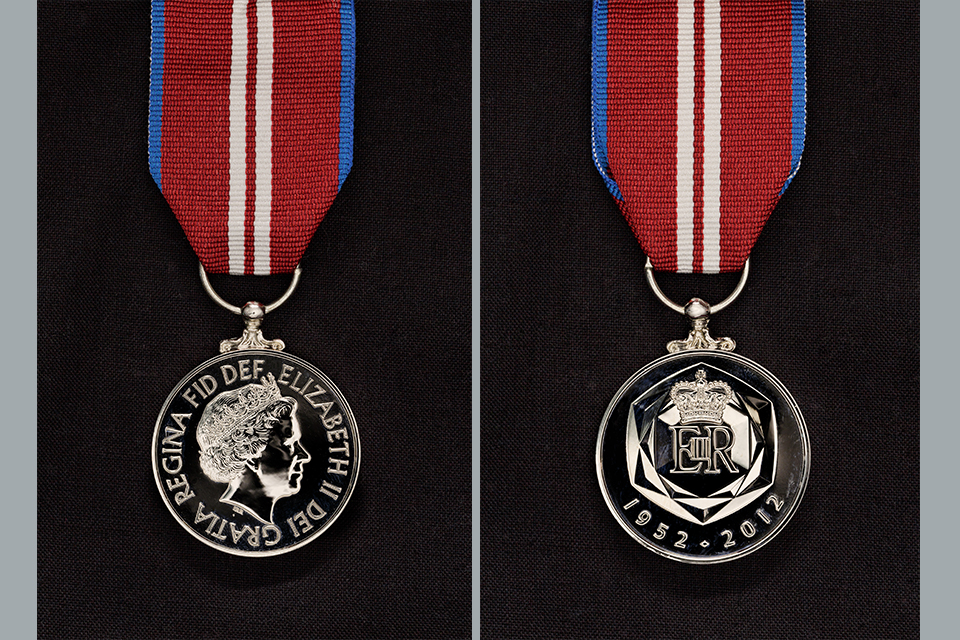
HM The Queen's Diamond Jubilee Medal
The Diamond Jubilee Medal was awarded to personnel to celebrate the 60th anniversary of Queen Elizabeth II accession.
To apply for the Queen’s Diamond Jubilee Medal, you must have:
- been in effective service on 6 February 2012 and
- completed a minimum of five years’ reckonable service and were enlisted on or before 7 February 2007 and
- served with the regular, reserve or cadet forces.
- as a reserve, obtained five annual training year certificates of efficiency, one of which must have been for training year 2011/2012
The medal was issued unnamed.
HM The Queen’s Platinum Jubilee Medal
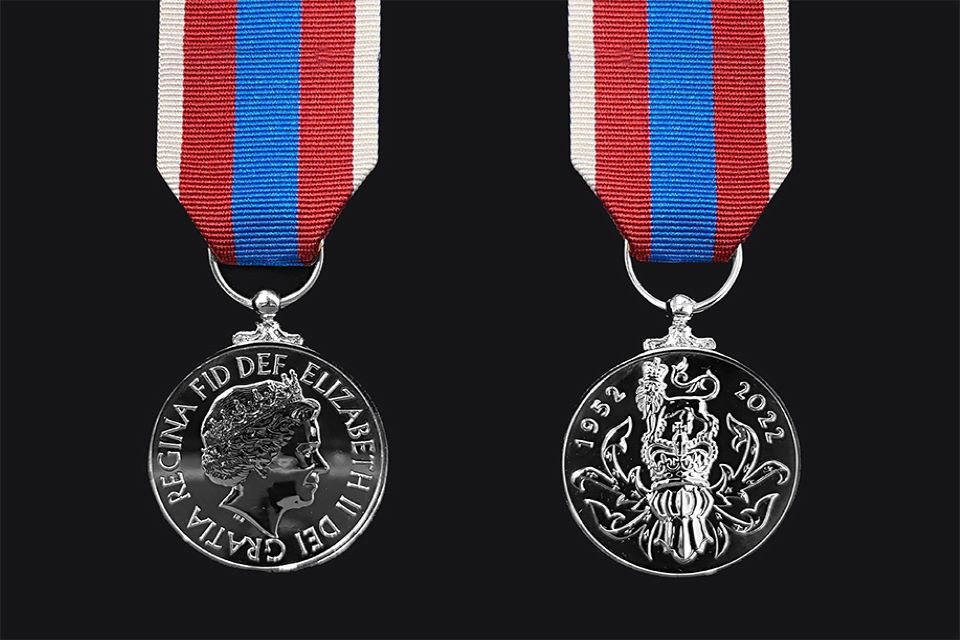
HM The Queen's Platinum Jubilee Medal - front and back
The Platinum Jubilee Medal was awarded to personnel to celebrate the 70th anniversary of Queen Elizabeth II accession.
To apply for the Queen’s Platinum Jubilee Medal, you must have:
- served with the regular, reserve or cadet forces
- been in effective service on 6 February 2022 and
- completed a minimum of five years’ reckonable service and were enlisted on or before 7 February 2017 or
- as a reserve, obtained four out of five annual training year certificates of efficiency between the period 2017-2022
The medal was issued unnamed.
The King’s Coronation Medal 2023
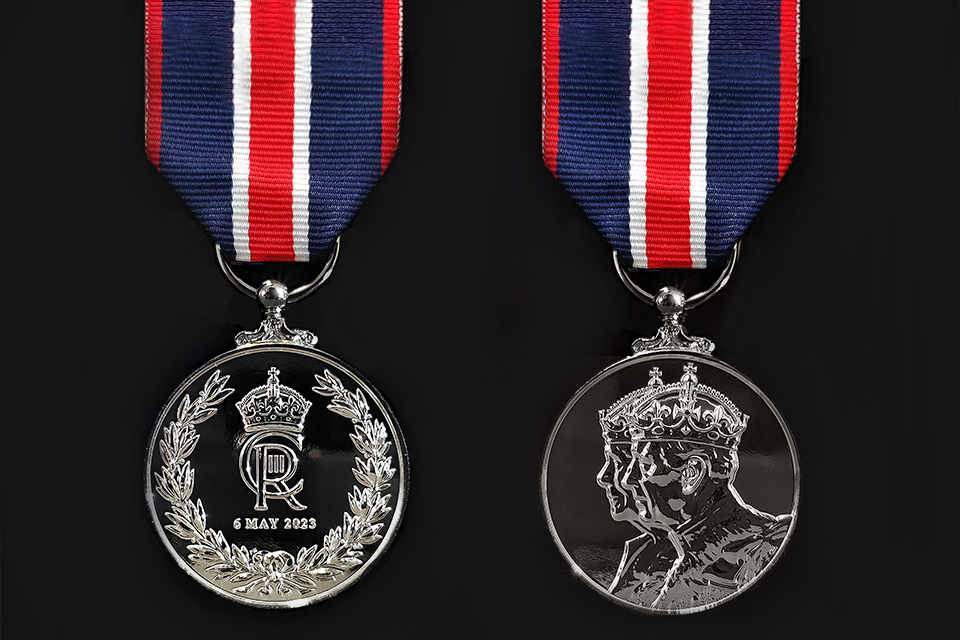
The King's Coronation Medal 2023- front and back
The King’s Coronation Medal was awarded to recognise members of the Armed Forces, frontline emergency service workers and people actively contributing to The King’s Coronation.
The King’s Coronation Medal is awarded to:
- Members of the Armed Forces, Civil Service and those from MOD sponsored voluntary organisations who provide active contributory service to the official constitutional Coronation events, including events in the Devolved Administrations, Crown Dependencies and Overseas Territories.
- Serving members of the Armed Forces who have completed five full calendar years of service and in active service on 6 May 2023.
- Members of the Armed Forces who participate in Armed Forces Coronation events throughout the rest of 2023, such as official gun salutes, parades, or presentations of regimental colours.
The Medal is issued unnamed.
Current Meritorious and Long Service medals
Meritorious Service Medal
The Meritorious Service Medal (MSM) recognises long term service in the armed forces of non commissioned ranks. Officers may be considered immediately after commissioning.
You cannot apply for this medal, it’s only issued to current serving personnel who have been recommended by the commanding officer.
To be considered, you must:
- have 20 years’ reckonable service
- be at least a substantive sergeant or equivalent
- be a holder of the Long Service and Good Conduct Medal
- have been judged as ‘good, faithful, valuable and meritorious’, with conduct judged to be ‘irreproachable’ throughout
The Service Boards look for evidence of particular achievements, either in the course of or outside of military duty. These can include:
- achievements which benefit the service in the public, for example community engagement with local councils or cadet forces
- achievements in the field of sport
- charity work
A limited number are awarded each year.
Service boards consider recommendations in April and October every year. To find out how to recommend someone go to:
- Royal Navy: BR 8748
- Army: Queen’s Regulations paragraphs 5.392, 10.006 to 10.007 and DIN 2006DIN10-006 for additional information
- RAF: AP 3392, Volume 4, Leaflet 2006, Annex A
Accumulated Campaign Service Medal
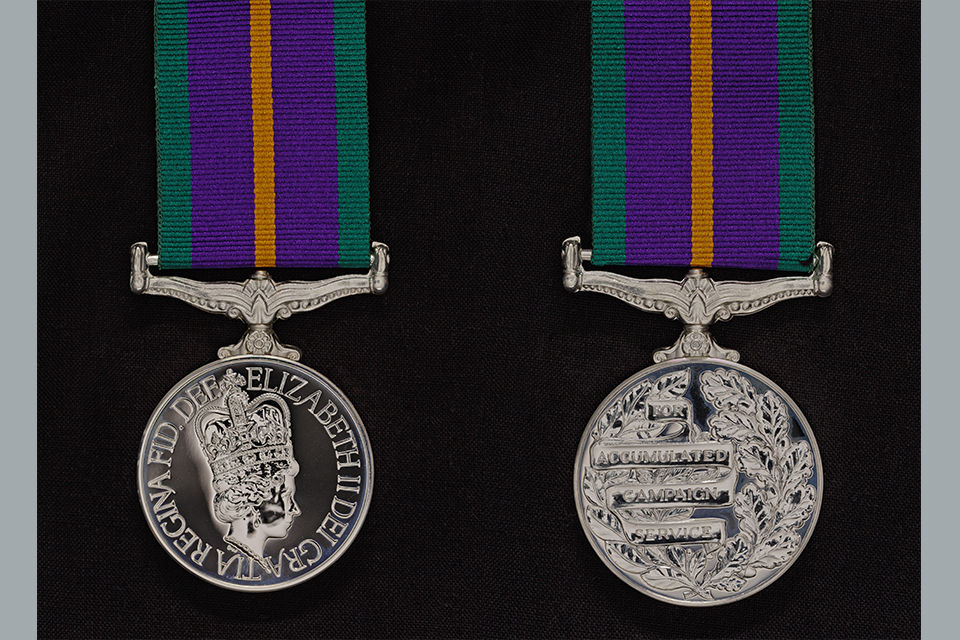
Accumulated Campaign Service Medal
The Accumulated Campaign Service Medal (ACSM) is awarded to army, RAF, Royal
Navy and Royal Marines personnel to recognise continued campaign service.
To apply for the ACSM, you must have completed 1,080 days aggregated by 1 January 2008 in theatres which would have merited:
- a General Service Medal 1962-2007 (Northern Ireland, Air Ops Iraq)
- an Operational Service Medal(Sierra Leone, Afghanistan)
- an Iraq Medal
If your aggregated service falls short of 1,080 days by 1 January 2008, the service will go towards the ACSM 2011.
If you go on to complete a further 1,080 days aggregated service by 31 December 2007, you will be awarded a bar. The bar is worn on the ribbon of the ACSM.
Accumulated Campaign Service Medal 2011
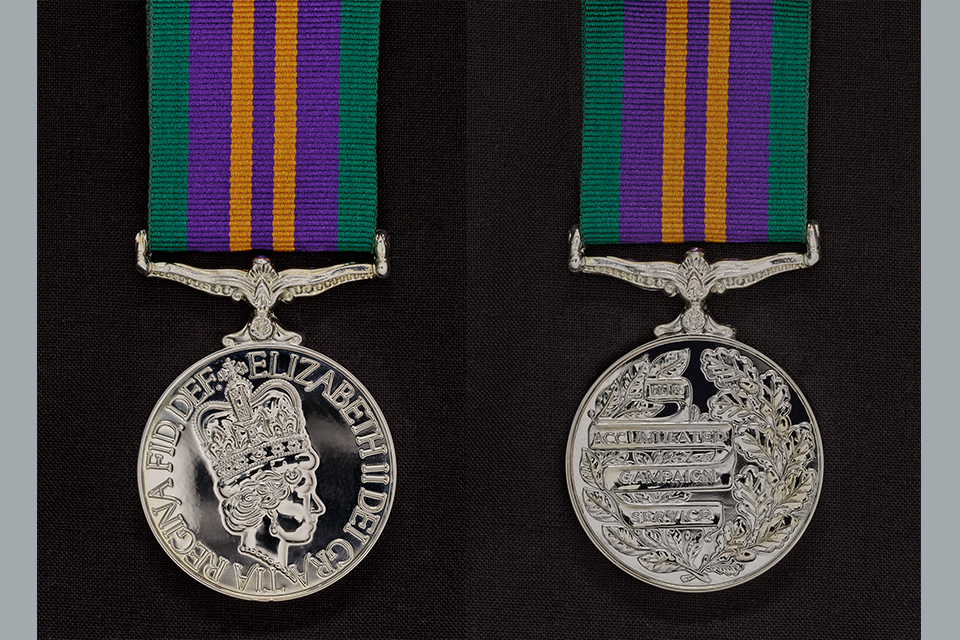
The Accumulated Campaign Service Medal 2011
The Accumulated Campaign Service Medal (ACSM) 2011 is awarded to army, RAF, Royal Navy and Royal Marines personnel to recognise continued campaign service.
To apply for the ACSM 2011, you must have completed 720 days aggregated service and be serving either on or after 1 January 2008.
Your service must have merited:
- a General Service Medal 1962-2007 (Northern Ireland, Air Ops Iraq)
- an Operational Service Medal (Sierra Leone, Afghanistan)
- an Iraq Medal
If you go on to complete a further 720 days aggregated service, you will be awarded a bar. The bar is worn on the ribbon of the ACSM. You can receive more than one bar.
Royal Naval Long Service and Good Conduct Medal
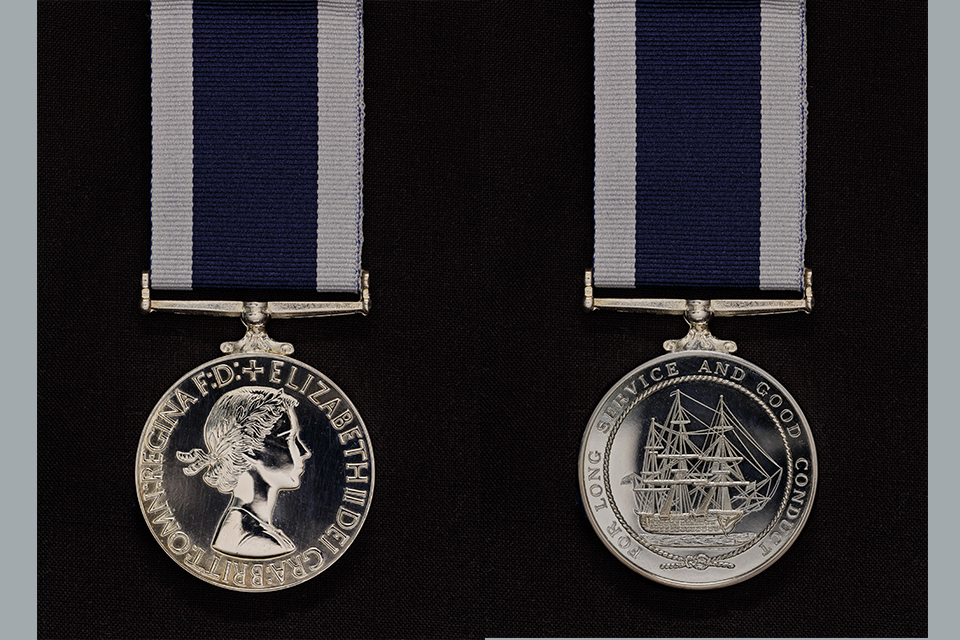
Royal Navy Long Service and Good Conduct Medal
The Long Service and Good Conduct (LSGC) Medal for the Royal Navy is awarded to personnel in recognition of long service. The regulations were updated on 1 October 2016.
To qualify, you must have:
- 15 years’ reckonable service in the Navy
- a clear record with no misconduct for at least the last 15 years
- been serving on or after 29 July 2014, if you’re an officer
- been serving on or after 1 October 2016, if you’re an ‘other rank’
- have all 3 conduct badges with character judged no lower than ‘very good’
You don’t need to apply if you’re currently serving. The MOD medals office is currently processing applications. Talk to your unit HR or go to 2016DIN09-023 or JSP 761 for more information.
If you have a disciplinary entry on your record, you will need to wait 15 years from the date of your last offence before you will be eligible again. You should apply through your unit HR.
If you have been discharged and are eligible you should apply to the MOD Medal Office.
For every additional 10 years’ service with a clear record you’ll be issued a clasp. For example, if you qualify and have served 26 years you will receive the medal and clasp.
Army Long Service and Good Conduct Medal
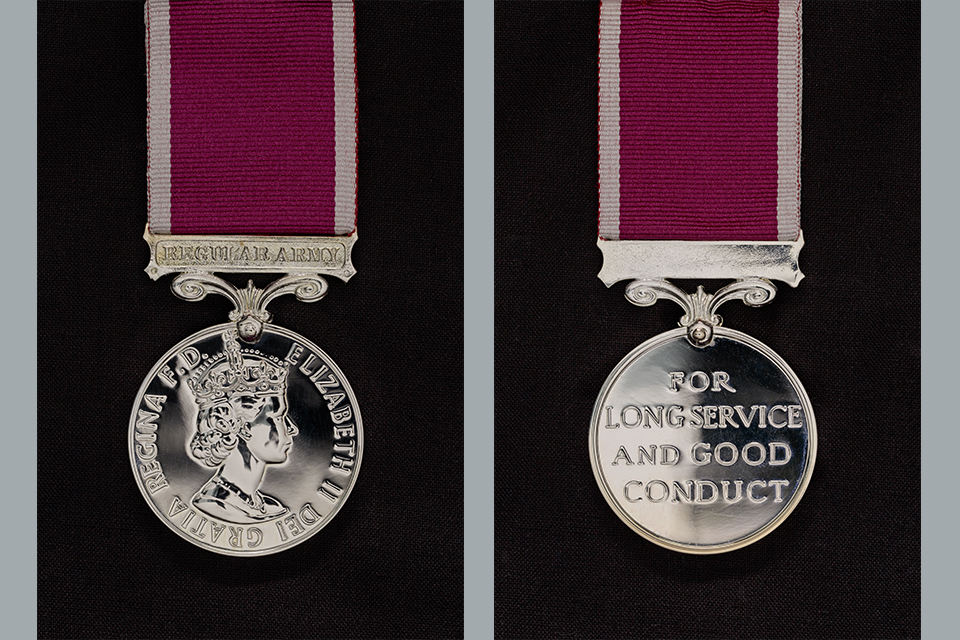
The Army Long Service and Good Conduct Medal
The Long Service and Good Conduct (LSGC) Medal for the army is awarded to personnel in recognition of long service. The regulations were updated on 1 October 2016.
To qualify, you must have:
- 15 years’ reckonable service in the army
- a clear record with no misconduct for at least the last 15 years
- been serving on or after 29 July 2014, if you’re an officer
- been serving on or after 1 October 2016, if you’re an ‘other rank’
You don’t need to apply if you’re currently serving. The MOD medals office is currently processing applications. Talk to your unit HR or go to 2016DIN09-023 or JSP 761 for more information.
If you have a disciplinary entry on your record, you will need to wait 15 years from the date of your last offence before you will be eligible again. You should apply through your unit HR.
If you have been discharged and are eligible you should apply to the MOD Medal Office.
For every additional 10 years’ service with a clear record you’ll be issued a clasp. For example, if you qualify and have served 26 years you will receive the medal and clasp.
Royal Air Force Long Service and Good Conduct Medal
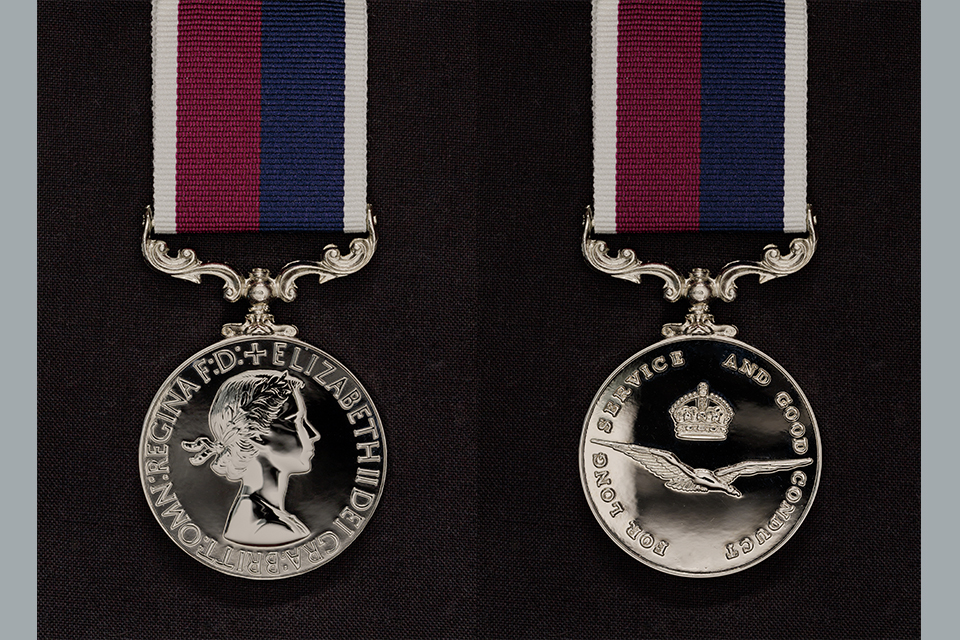
The RAF Long Service and Good Conduct Medal
The Long Service and Good Conduct (LSGC) Medal for the Royal Air Force is awarded to personnel in recognition of long service. The regulations were updated on 1 October 2016.
To qualify, you must have:
- 15 years’ reckonable service in the RAF
- a clear record with no misconduct for at least the last 15 years
- been serving on or after 29 July 2014, if you’re an officer
- been serving on or after 1 October 2016, if you’re an ‘other rank’
You don’t need to apply if you’re currently serving. The MOD medals office is currently processing applications. Talk to your unit HR or go to 2016DIN09-023 or JSP 761 for more information.
If you have a disciplinary entry on your record, you will need to wait 15 years from the date of your last offence before you will be eligible again. You should apply through your unit HR.
If you have been discharged and are eligible you should apply to the MOD Medal Office.
For every additional 10 years’ service with a clear record you’ll be issued a clasp. For example, if you qualify and have served 26 years you will receive the medal and clasp.
Volunteer Reserves Service Medal
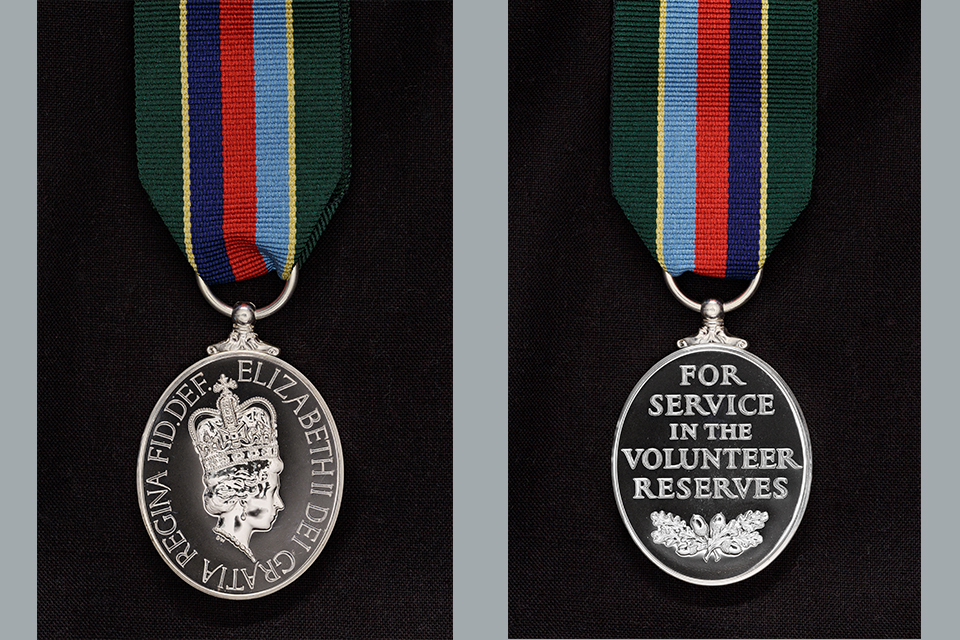
The Volunteer Reserves Service Medal
The Volunteer Reserves Service Medal (VRSM) replaced the separate medals that used to be issued to personnel of the separate Reserve Forces in April 1999.
The VRSM is awarded to both officers and other ranks of the:
- Royal Naval and Royal Marine Reserves
- Army Reserves (formerly the Territorial Army)
- Royal Auxiliary Air Force
These medals may still be issued for qualifying service ending before 1 April 1999:
- Royal Naval Reserve Decoration
- Reserve Long Service and Good Conduct Medal for the Royal Navy and Royal Marine Reserve
- Territorial Decoration
- Efficiency Medal for the Army Reserve
- Air Efficiency Award for the Royal Auxiliary Air Force
To be considered for the VRSM, you must have:
- 10 years’ reckonable service in the Reserve Forces
- earned a training bounty in nine out of the 10 qualifying years
- to have completed a full years training in the year that the 9th bounty was awarded
- to be serving in the Volunteer Reserves on or after 1 April 1999
If you go on to serve an additional five years reckonable service you’ll be issued a clasp. The clasp should be worn on the ribbon of the VRSM.
There are complex rules for service that has been both regular and reserve.
If you think you might be eligible, please contact your Unit HR or apply to the MOD Medal Office.
Further information can be found in DCI JS 53/99 and AP3392 Vol 7 Leaflet 702 Annex B.
Cadet Forces Medal
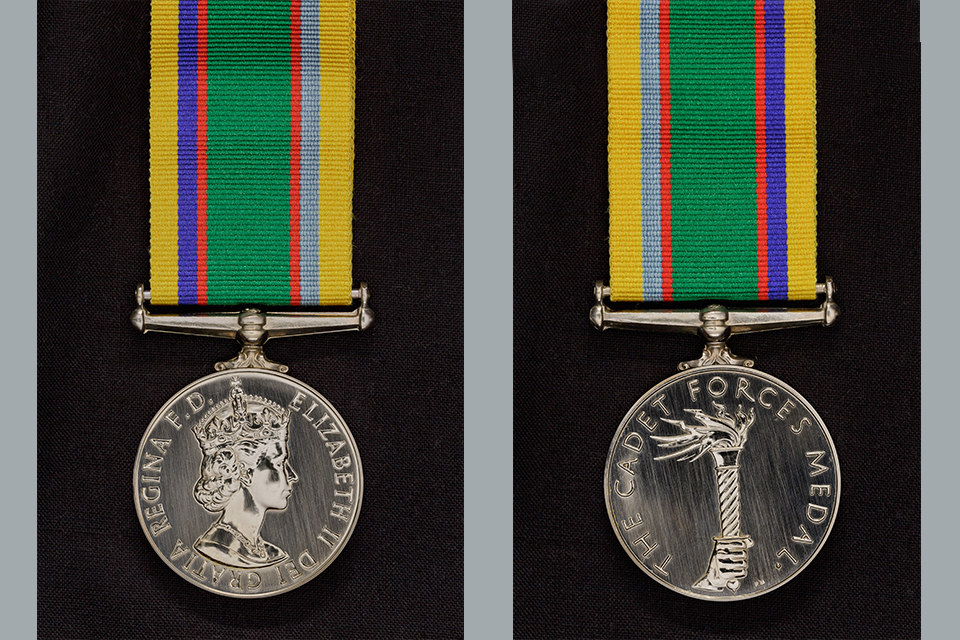
The Cadet Forces Medal
The Cadet Forces Medal is awarded in recognition of long service in the MOD Sponsored Cadet Forces.
To be considered, you must:
- be a uniformed cadet force adult volunteer
- have completed 12 years’ qualifying service
All uniformed service in the cadet forces over the age of 18 may be aggregated to fulfil the relevant qualifying period: breaks in service are allowed but are not to be counted towards the length of qualifying service. Up to three years’ service with any of the following may be used towards the qualifying service for the medal provided it has not been used towards another medal:
- Regular Forces
- Volunteer Reserve Forces
- University Royal Naval Units
- University Officer Training Corps
- University Air Squadrons
A Clasp will be awarded for each six years’ additional qualifying service (Before 1 April 1991, clasps were awarded for eight years’ additional service). Recommendations for the award of medals and clasps are to be made by cadet units in accordance with the Cadet Forces Medal Regulations published in JSP 814, Policy and Regulations for MOD Sponsored Cadet Forces.
The Elizabeth Cross: Died on Operations Recognition Award
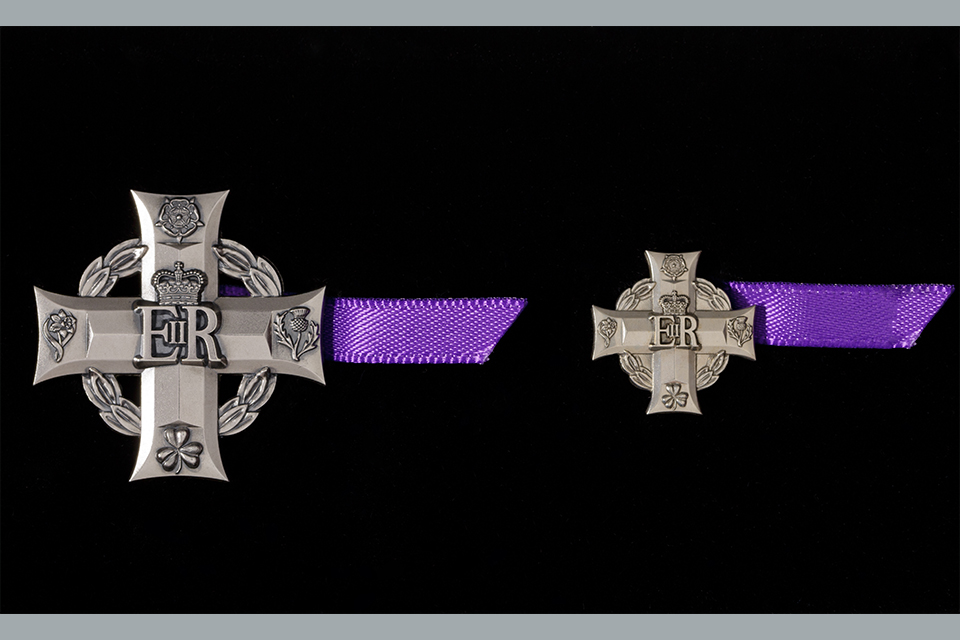
The Elizabeth Cross and miniature
The Elizabeth Cross and Memorial Scroll are granted to the next of kin of regular, reserve or Royal Fleet Auxiliary personnel who have died on operations, or as a result of an act of terrorism since 1 January 1948:
- whilst serving on an operation in which personnel received a Campaign Medal, GSM or OSM
- whilst serving on an operation in which personnel received a UN, NATO (or other international body) or another nations’ campaign medal in the absence of a UK medal
- as a result of an act of terrorism where the available evidence suggests they were targeted because of their membership of the UK armed forces
- on a non medal earning operational task where death has been caused by the inherent high risk of the task
- a subsequent and premature death as a result of an injury or illness attributed to the circumstances outlined above
Recipients and how to apply
You can apply for both the Elizabeth Cross and Memorial Scroll if you are the next of kin.
An additional Memorial Scroll only is available to the following where they are not the next of kin:
- the parents of the deceased
- the spouse or partner of the deceased, or someone who had a substantive relationship with the deceased (a substantive relationship is generally based on joint financial commitment and will have to be proved by the applicant)
If you think you might be eligible, contact the MOD Medal Office.
Order of wear
There are strict rules surrounding the wearing of medals and decorations.
The latest full list of the British Orders of Knighthood, decorations, medals and the order of wear can be found in the 2019 publication of The London Gazette
You can contact the Medals Office if you have a query about the order of wear.
Wearing of medals
You should only wear official decorations, medals or emblems that you are entitled to and have been approved for acceptance and wear. Unofficial medals should not be worn with official orders, decorations and medals.
If you are the next of kin of a deceased service person, it is common practice to wear your relative’s decorations and medals as a mark of remembrance. It is custom to wear medals on the right breast in civilian dress only, official approval is not required to wear relative’s medals.
Current serving personnel should not wear relative’s medals or unofficial medals whilst wearing uniform.
Ensure that your replica and miniature medals are bought from an officially licensed replica medal manufacturer. The merchandise licensing programme generates much needed revenue for our Armed Forces welfare funds that supports Serving and Ex-Serving members of the Armed Forces and their families.
If you suspect any replica and miniature medals are unlicensed please report to DIPR-Enforcement@mod.gov.uk
Unofficial medals
The MOD Medal Office does not issue unofficial medals (such as the National Defence Medal, Veterans Star, British Army of the Rhine Medal, etc.).
Unofficial medals, sometimes referred to as ‘commemorative’ medals, are usually designed and manufactured by private medal companies to commemorate some form of service with the Armed Forces, usually where no official MOD recognition has been previously given.
These medals have not been approved by The Sovereign, nor granted permission to wear, and cannot be mounted with official orders, decorations and medals.
A recent practice of wearing unofficial medals mounted on a separate medal bar has been noted, however, this also carries no form of official endorsement.
Contact the MOD Medal Office
You can contact the Medal Office in writing or via email.
MOD Medal Office
Room G36
Innsworth House
Imjin Barracks
Gloucester
GL3 1HW
Telephone enquiries are handled by the Joint Personnel Administration Centre (JPAC).
Freephone (UK only): 0800 085 3600
Telephone (from overseas): +44 141 224 3600 (https://gbr01.safelinks.protection.outlook.com/?url=https%3A%2F%2Fwww.gov.uk%2Fgovernment%2Forganisations%2Fministry-of-defence&data=05%7C02%7CDBSCS-InternalCommsTeam%40mod.gov.uk%7C0def5bec1b8c4c896e0d08dc1cd43309%7Cbe7760ed5953484bae95d0a16dfa09e5%7C0%7C0%7C638416944919381793%7CUnknown%7CTWFpbGZsb3d8eyJWIjoiMC4wLjAwMDAiLCJQIjoiV2luMzIiLCJBTiI6Ik1haWwiLCJXVCI6Mn0%3D%7C3000%7C%7C%7C&sdata=ih4nxGBXRYkhRShS8ep%2FAUGJ3u%2Fu30ZiI%2FddP9wCxi0%3D&reserved=0).
Last updated 20 October 2023 + show all updates
-
Removed information in Nuclear Veterans Medal as currently out of date.
-
The Africa Medal with Kenya Clasp has been added
-
Nuclear Test Veterans Commemorative Medal information updated
-
The King's Coronation Medal Enquiry paragraph added and The King's Coronation Medal wording updated.
-
Additional text added to the Nuclear test veterans call out on MODMO announcement.
-
Added: image of The King's Coronation Medal.
-
Added information about the King's Coronation Medal.
-
Text has been amended within the call to action box in relation to the Nuclear test veteran medal application. HM The Queen's Platinum Jubilee Medal image and been text has been added. Text added to Afghanistan medal text, and text added to the General service medal 2008. Announcement on King's coronation medal.
-
Announcement included to advise of a delay to the transfer of historic records to the National Archives, which is impacting on historic requests for medals.
-
Included announcement regarding the nuclear test Veterans medal
-
Update to processing times for medals
-
An update to 'Unofficial Medals'.
-
Updated: Cadet Forces Medal section.
-
Added clarification for the qualification criteria for the Accumulated Campaign Service Medal
-
Update to the COVID 19 message
-
Added a sentence to the George Cross section.
-
Updated the: Elizabeth cross medal application form.
-
Added a COVID-19 update.
-
Addition of information about the, 'Her Majesty's Armed Forces Veterans Badge'.
-
Updates to what criteria needs to be met to apply for a medal.
-
Updated the page with qualifying dates for the Pingat Jasa Malaysia (PJM) Medal.
-
Updated content under headings: George Medal criteria and Queen's Gallantry criteria.
-
Added information on the operational service medal for Iraq and Syria.
-
Updated the Volunteer Reserves Service Medal criteria section.
-
Removed the sub-headings and its content under 'Operational Service Medal Iraq and Syria' and 'Medal distribution'.
-
Added guidance for replica and miniature medals.
-
Updated link on Order of Wear
-
Added announcement about the Coronation Medal 1953.
-
Latest announcement added.
-
Updated the contact email address.
-
Line added to the Elizabeth Cross section
-
Update to the Medals announcement
-
Update the medals distribution announcement
-
Added announcement for Medal Office opening hours during the Christmas period.
-
Amended announcement.
-
Added Medal distribution announcement.
-
Updated information on applying for the Defence Medal and added link for Home Guard questionnaire..
-
Updated information on eligibility for the Atlantic Star, Air Crew Europe Star, Pacific Star, Burma Star and Italy Star.
-
Added information on the Pingat Jasa Malaysia (PJM) medal.
-
Updated information about the Elizabeth Cross.
-
Added announcement about the Queens Sapphire Jubilee Medal
-
Medal descriptions and images updated.
-
Included announcement for the Ebola Medal for Service in West Africa.
-
Removed duplicate information from the South Atlantic Medal section.
-
Updated the text for South Atlantic medal, Berlin airlift and Cyprus 1963-64.
-
Amended details for applications for Cyprus 1955 -59 and South Atlantic: The South Atlantic Medal and updated Veterans UK website link.
-
Updated sections General Service Medal 1962, General Service Medal 1918-62, South Atlantic Medal. ,
-
Added latest recipient of the Victoria Cross.
-
Added image of Bomber Command clasp
-
First published.